 My Employee is Leaving
Read the story
A short series about what actually left when one person did.
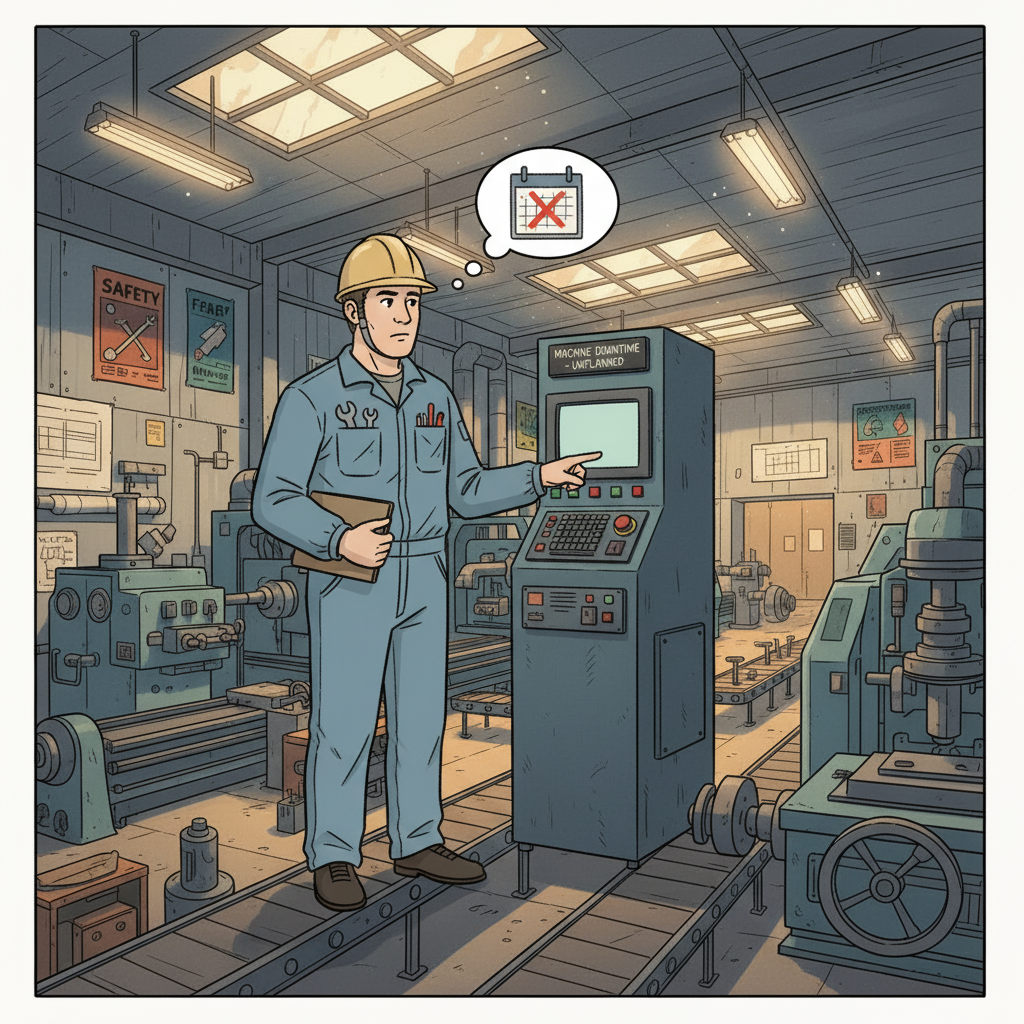
Last-minute sharing before the departure begins.
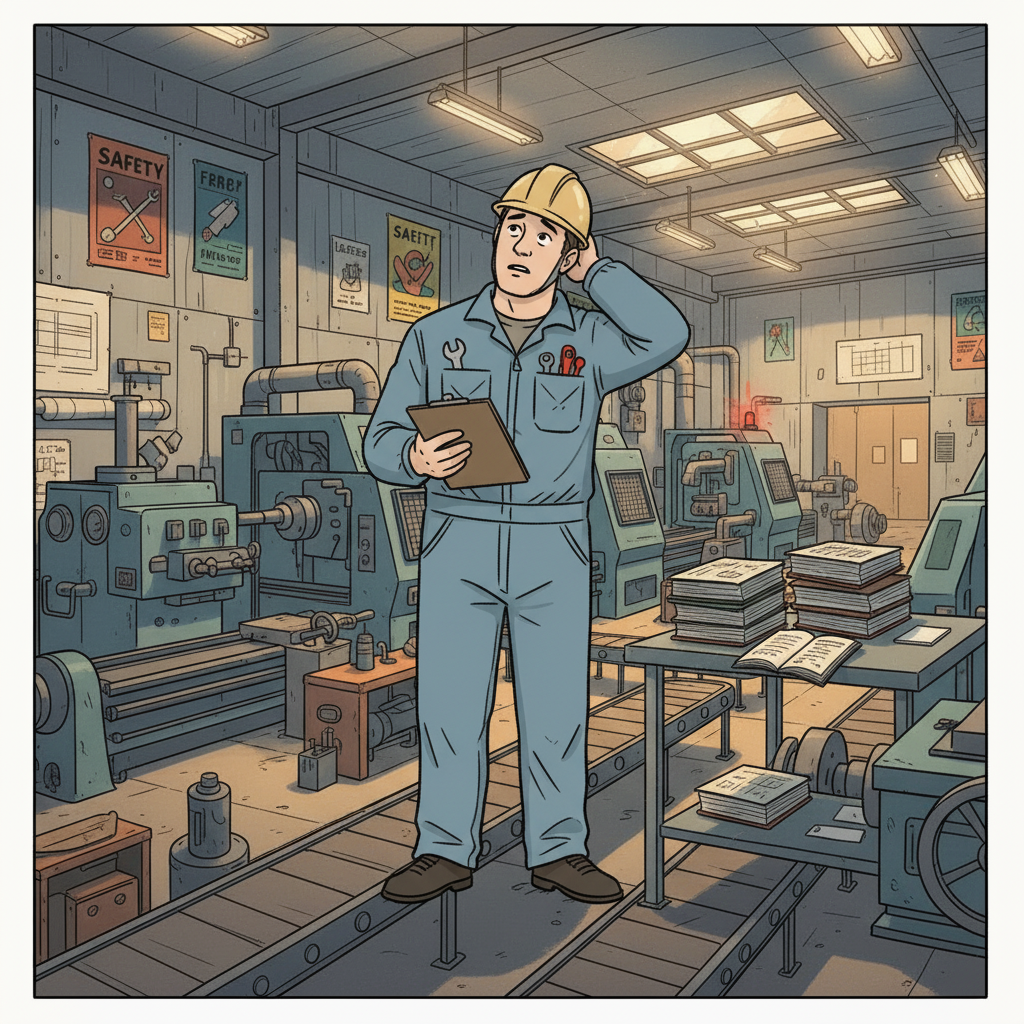
Without proper documentation, vital parts are lost in chaos.
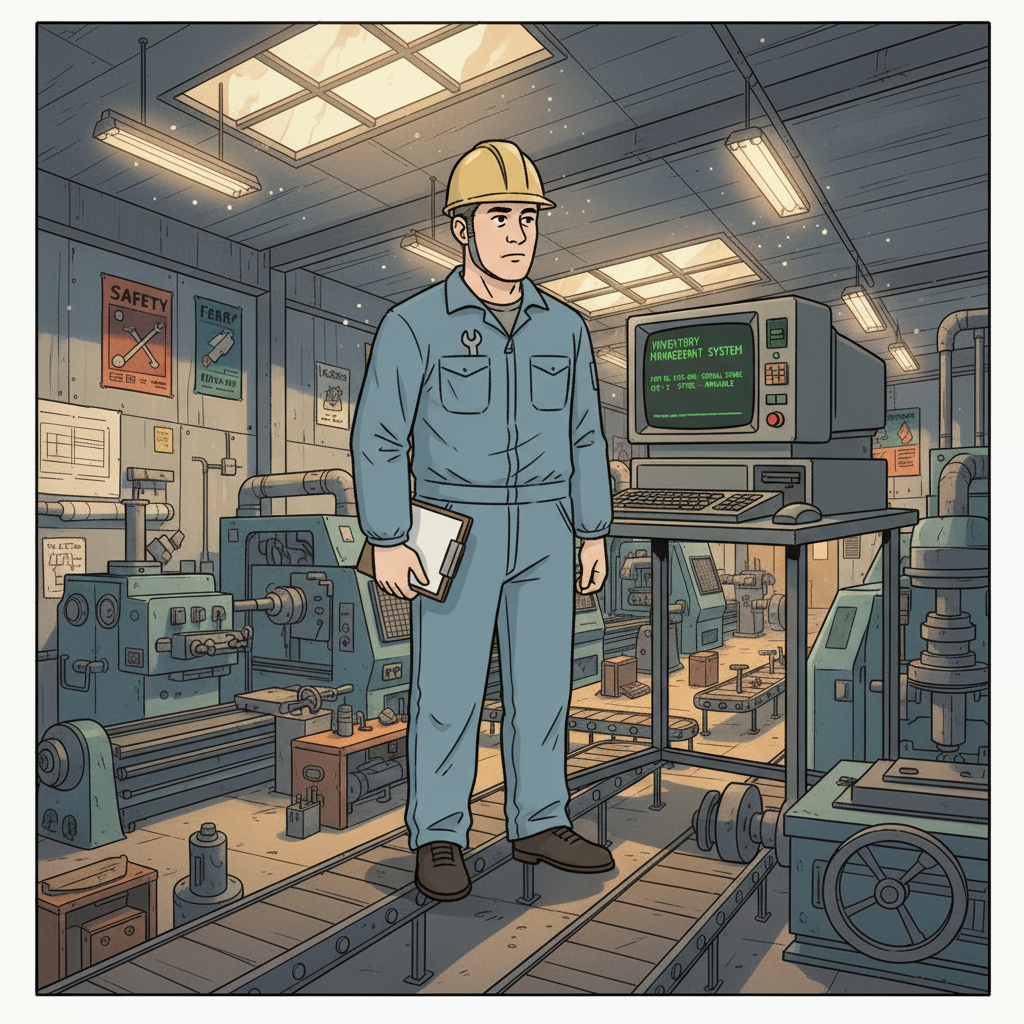
Production delays from untracked maintenance knowledge lead to downtime.
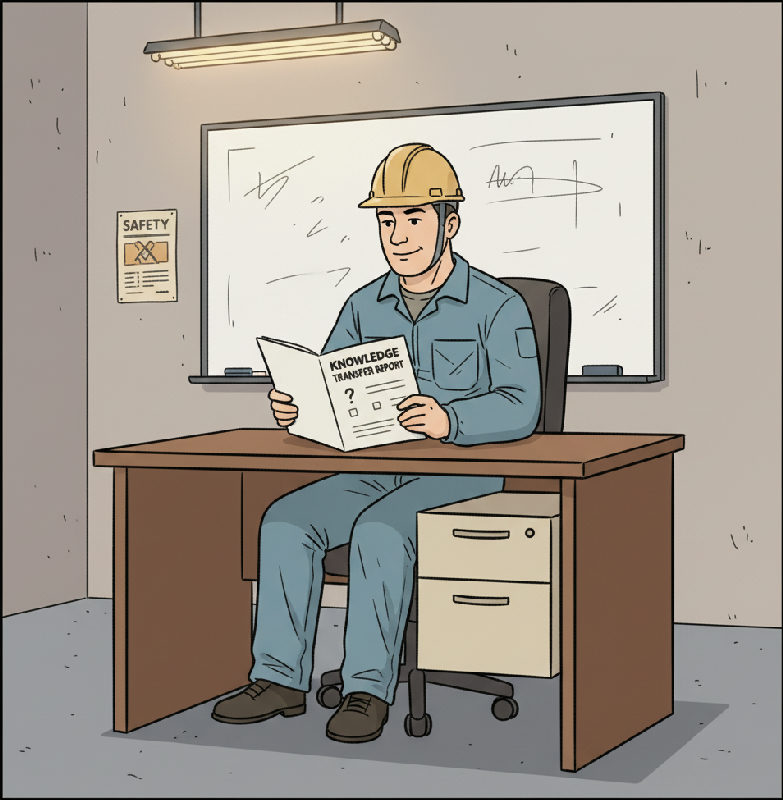
The machines’ history and their quirks, in the Knowledge Transfer Report — open questions written down.
In brief: what happens when a Maintenance Manager leaves?
Maintenance managers carry an unwritten service history: which machine needs coaxing, which repair the manual gets wrong, which vendor actually turns up. When they leave, the asset list survives and the history doesn’t. A guided interview captures it in their words, confirmed fact by fact, before their last day.
What should a departing maintenance manager document first?
What maintenance knowledge is usually missed?
What should a manager do in the first two weeks after a maintenance manager leaves?
The asset register is complete. The schedules are in the system. It still feels wrong, and the feeling is correct.
What the system holds is what was done. What leaves is why: that this pump gets an extra check every month because of how it failed two winters ago, that the manual’s repair sequence for the conveyor drive does not work and here is the order that does, that one vendor sends a good engineer and the others send whoever is free.
The line stops and the person who would have known where to look first is gone. Capturing the history while they are still here reduces that risk. It does not remove it.
Week one is fine; the schedules are in the system. Around week four the pump that got its unofficial monthly check does not get it. By month three a conveyor drive is repaired in the manual’s order, twice, before someone finds the sequence that works. The Knowledge Transfer Report records the machines’ history and their quirks, with the open questions written down.
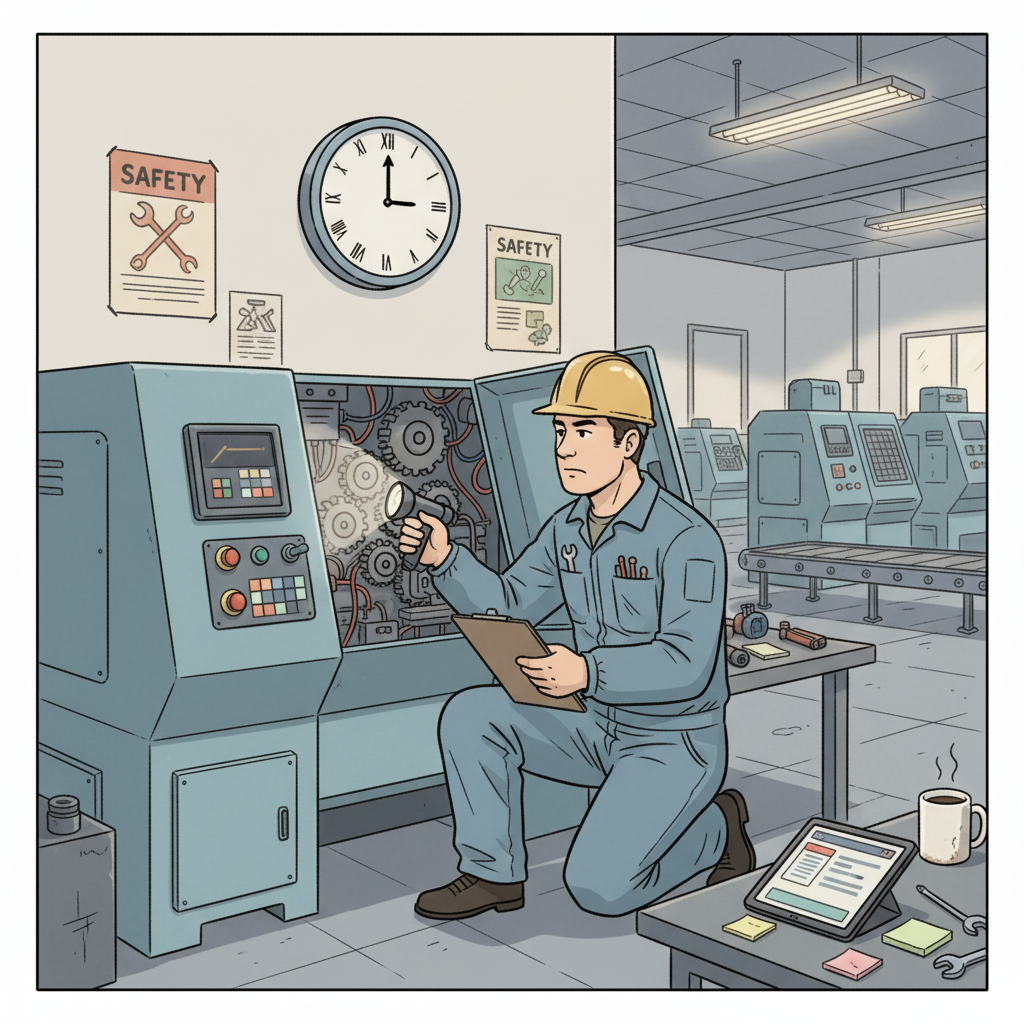
Every plant has two maintenance records. One is in the system, and one is in the maintenance manager’s head.
The second record is the one that gets you through a Tuesday night, and it is the one with no backup.
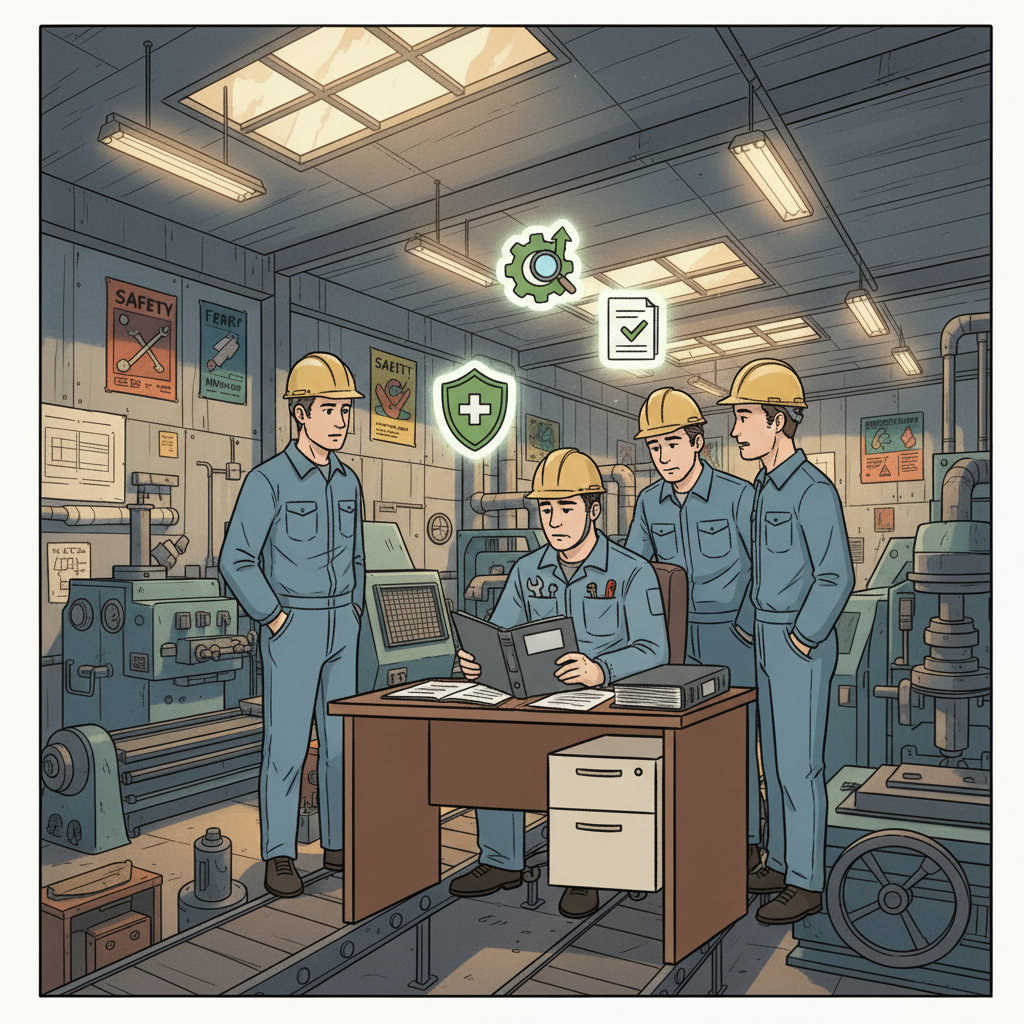
The most useful question you can ask a maintenance manager is which repair sequences differ from the manufacturer’s recommendation. The answers are specific, hard-won, and written down nowhere.
The guided interview asks for the deviation and then asks why, because the reasoning behind how things are actually done is what makes the deviation safe to repeat. Voice or text, their choice, in short sessions around shift work. Every extracted fact goes back to them to confirm, edit, or reject before it reaches the report.
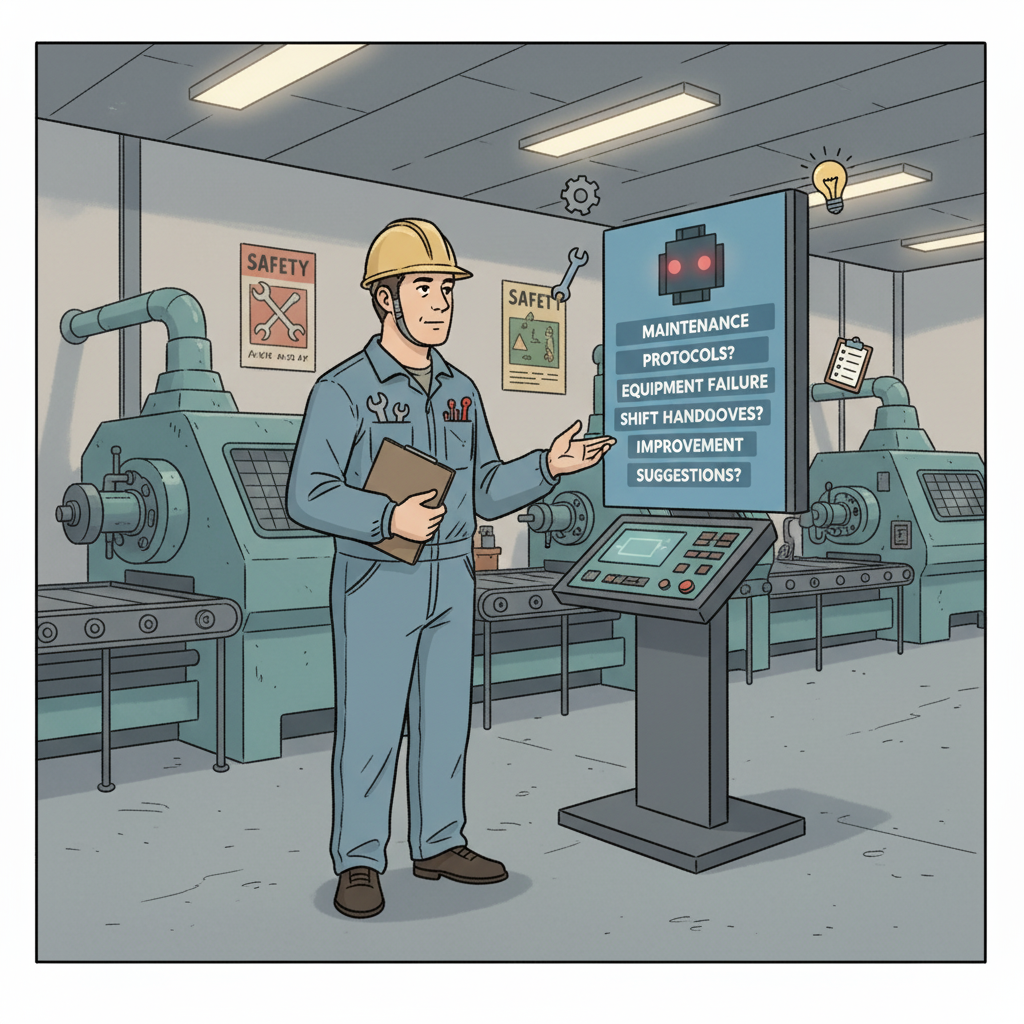
Three parts, plain language. The lines below illustrate the shape — they are not a real customer’s report.
“The conveyor drive is re-tensioned before the gearbox check, not after; doing it in the manual’s order pulls the alignment out again.”
“He believed the spare motor on the shelf is the older frame size but was not certain. Verify before relying on it.”
“The compressor house was not discussed; the time budget went on the packing lines.”
Gaps are output, not failure. They give the next person a starting list instead of false confidence.
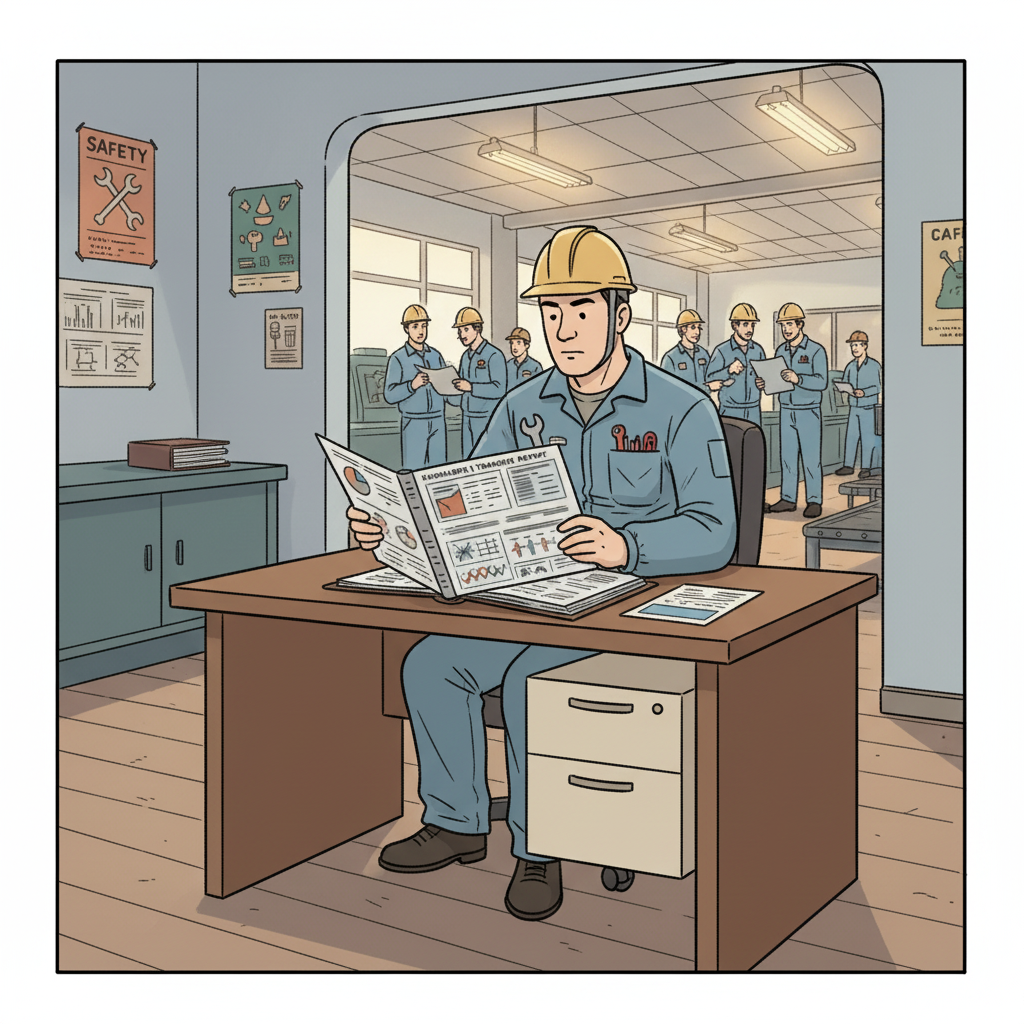
Five questions the guided interview puts to a departing maintenance manager, and why each one matters.
Deviations are hard-won and documented nowhere but in one person’s memory.
Temporary repairs fail at the worst moment if nobody knows they are temporary.
Response times and lead times decide how long a stoppage lasts.
The order of checks is judgment, and it is the difference between an hour and a shift.
Habitual work usually exists because it prevents a failure someone remembers.
A short series about what actually left when one person did.
A full Knowledge Transfer Report for an Operations Director, start to finish.
One $1,000 credit per offboarding. No subscription. Your first offboarding runs free for 7 days — you buy the credit when you unlock its Knowledge Transfer Report.
The adjacent role, and what leaves with it.
The manager learns the Maintenance Manager is leaving and initiates the knowledge transfer process.
An AI-guided interview session is scheduled with the departing Maintenance Manager to systematically capture institutional knowledge.
The AI interview extracts undocumented workflows, vendor relationships, decision rationale, and operational edge cases.
A structured Knowledge Transfer Report is produced from the confirmed facts, with open questions and a section on what was not covered.
The team reviews the report, identifies remaining gaps, and completes the handover before the departure date.
The service history that was never written down: repair patterns, the fixes that differ from the manual, the vendors who actually turn up. A guided interview captures it in their words, with every fact confirmed by them.
Fit is decided by what the role knows, not the audit regime around it. It’s designed for operational knowledge — equipment quirks, vendor reliability, and which repairs actually hold; controlled maintenance records and audit data stay out of scope.
Multi-session by design: up to 10 structured topics, voice or text, pause and resume anytime, with a total time budget of up to roughly 300 minutes. Time is budgeted, not promised. Sessions can be short and taken by voice between callouts, then picked up again later in the week.
That is the usual case. Open-ended questions and follow-ups pull instinct into words: what you check first, what you listen for, what the sequence is. Whatever cannot be remembered is listed as an open question rather than invented.
Access a structured checklist and actionable insights for effective knowledge transfer in logistics when a key member departs.
Ensure a smooth transition in manufacturing with our structured knowledge transfer sessions, minimizing operational disruptions and knowledge loss.