 My Employee is Leaving
Read the story
What a distribution operation loses when the person who knew the workarounds leaves.
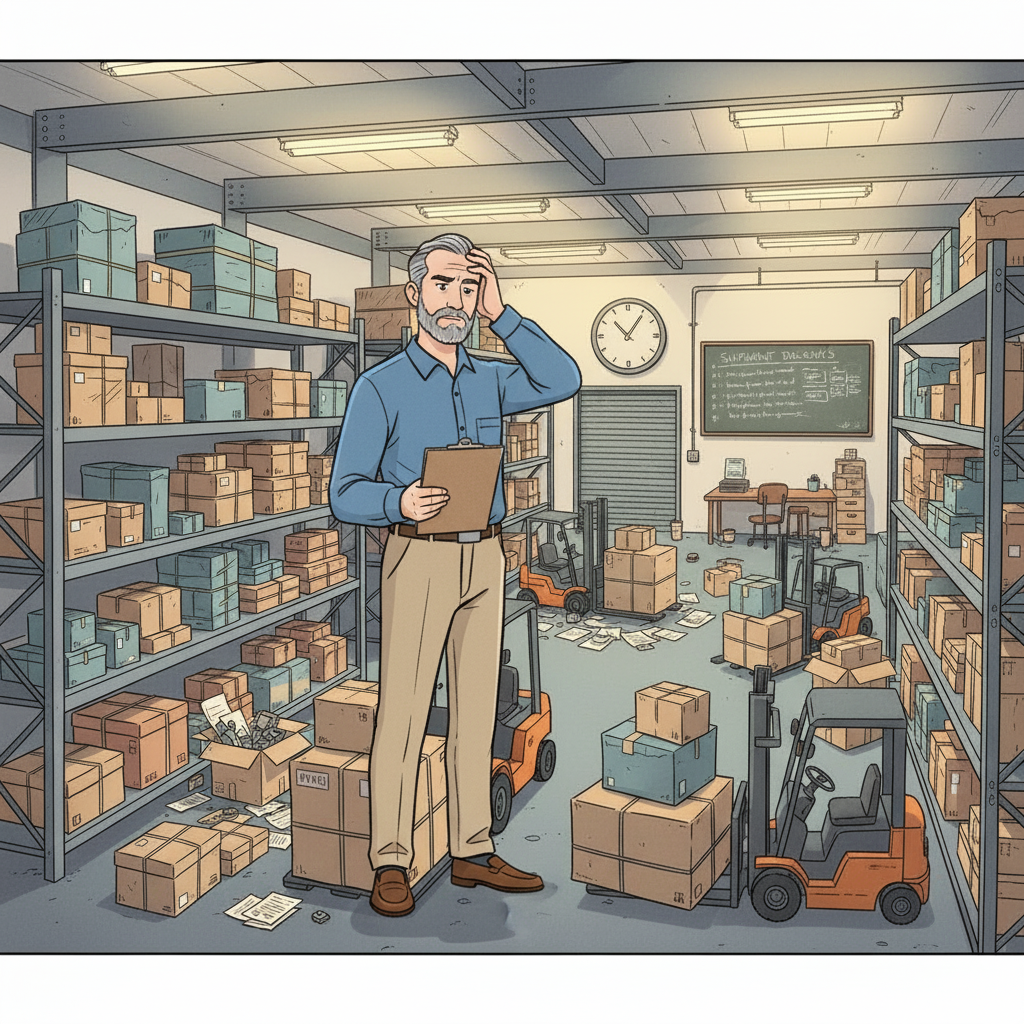
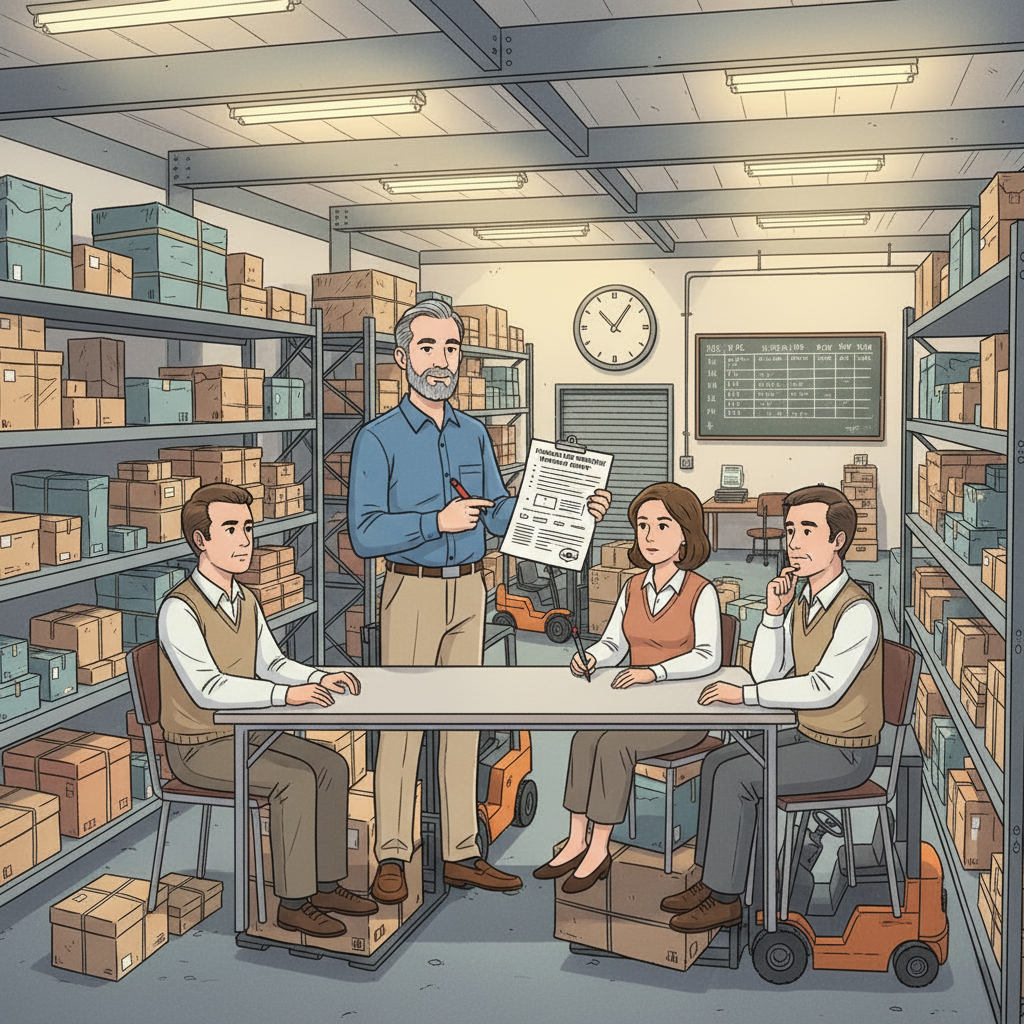
When a logistics team member departs, chaos in inventory tracking begins.
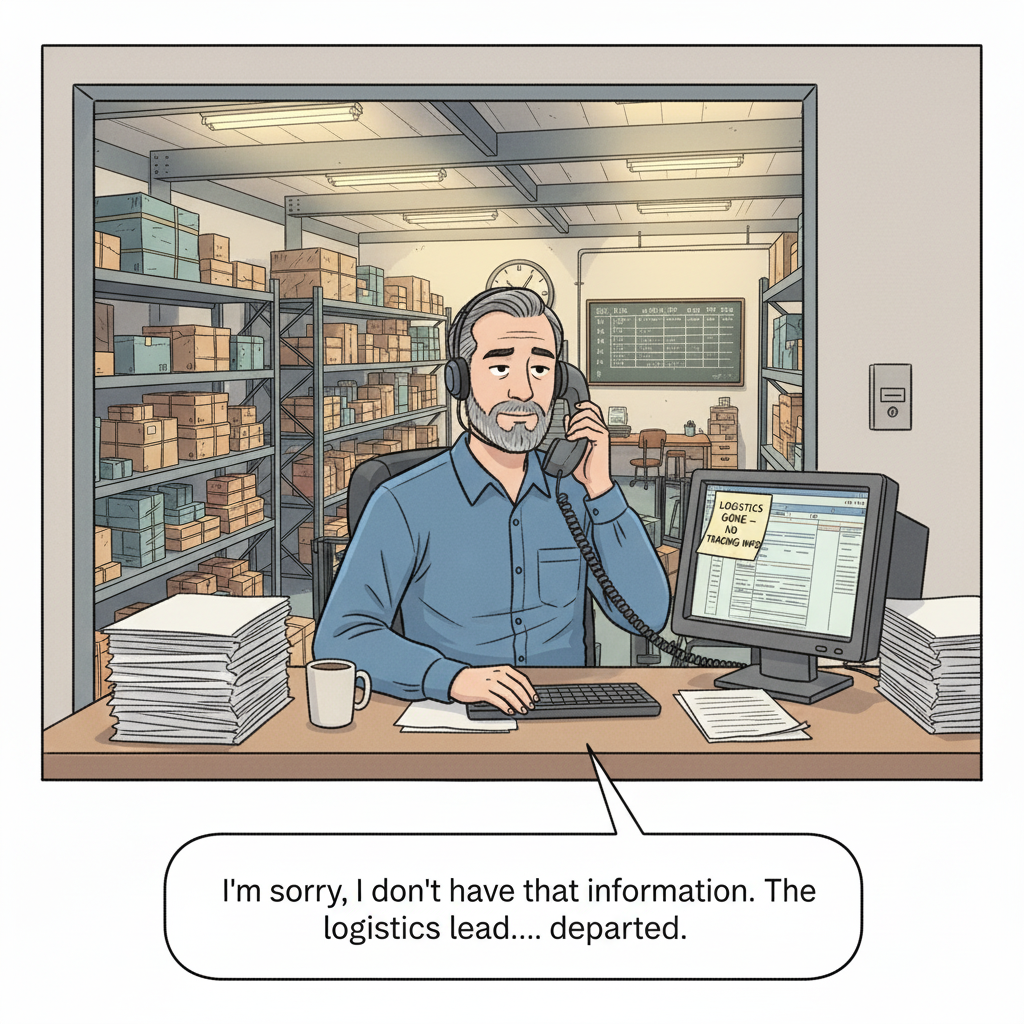
Without clear documentation, urgent shipments may face costly delays.

Increased freight costs emerge from lack of historical routing knowledge.

The customs contacts and routing history are in the Knowledge Transfer Report, open questions named.
In logistics, the person who 'just knows' the routing quirks, the carrier contacts, and the workarounds is usually one resignation away from being unreachable. A structured interview captures how the operation actually runs — confirmed by the person leaving — before their notice period runs out.
The exceptions. Normal days run themselves; the value is in what happens when they don’t.
Seasonality and the small tells — the numbers they check at 6am that say the day is about to go wrong.
Book sessions around the shift, not around a calendar. Short and often beats one long meeting.
The notice lands mid-season, because it always does. The system still shows the same screens. The difference shows up on the floor.
They know which carrier holds rates, which one flexes on a Friday, and which claim took four months last spring. The next person sees a vendor list and a rate sheet.
A truck is three hours late. A count is off by nine. There was a fix for that, and it lived in one head.
Routing preferences, seasonal notes, a broker’s mobile number — in their spreadsheets, not in your WMS.
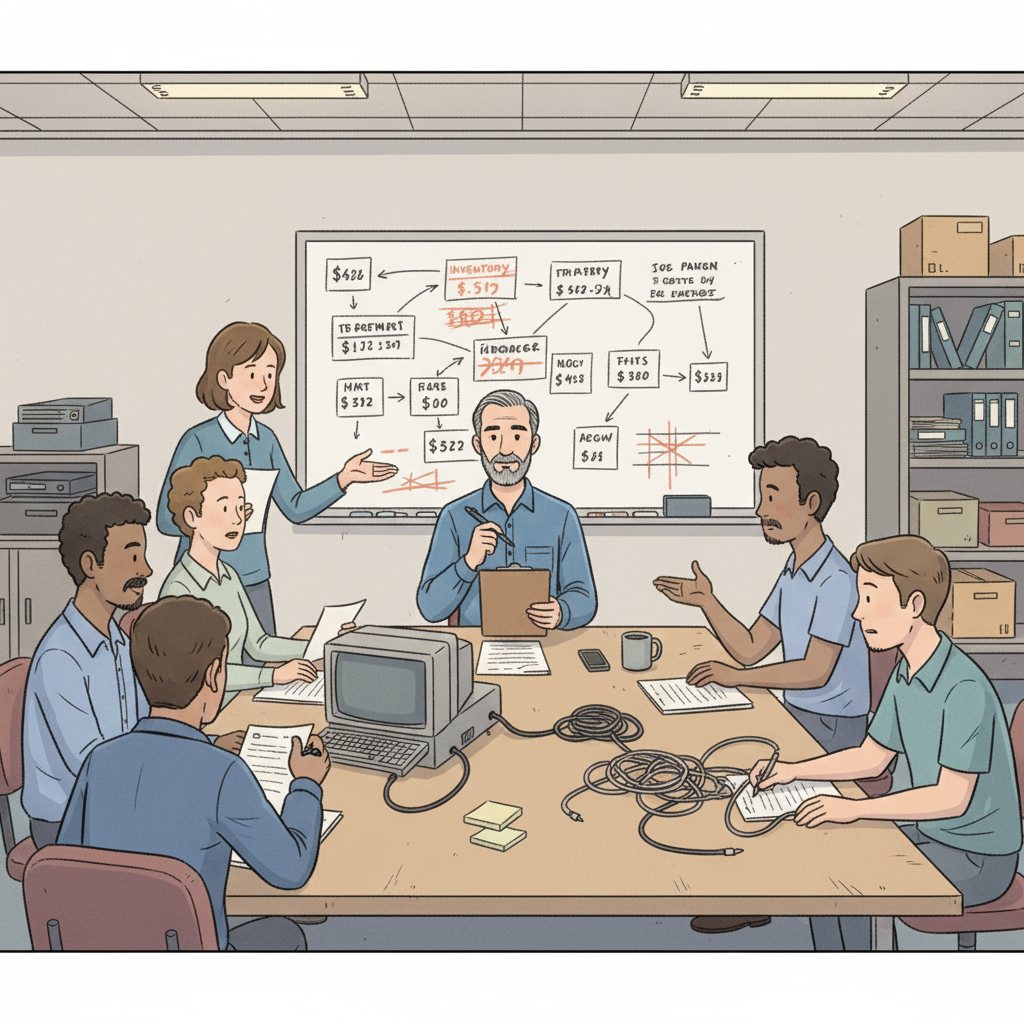
Your WMS records what happened. It doesn’t record why anyone chose it.
A guided offboarding interview goes after that layer, voice or text, the employee’s choice. They confirm, edit, or reject every fact before it reaches a report.

Nobody stops the operation for a handover. Multi-session by design: up to 10 structured topics, voice or text, pause and resume anytime, with a total time budget of up to roughly 300 minutes. Time is budgeted, not promised.
They can answer on the way to the dock, stop when a truck arrives, and resume the next shift. Designed for real departures, which means designed around a working day.
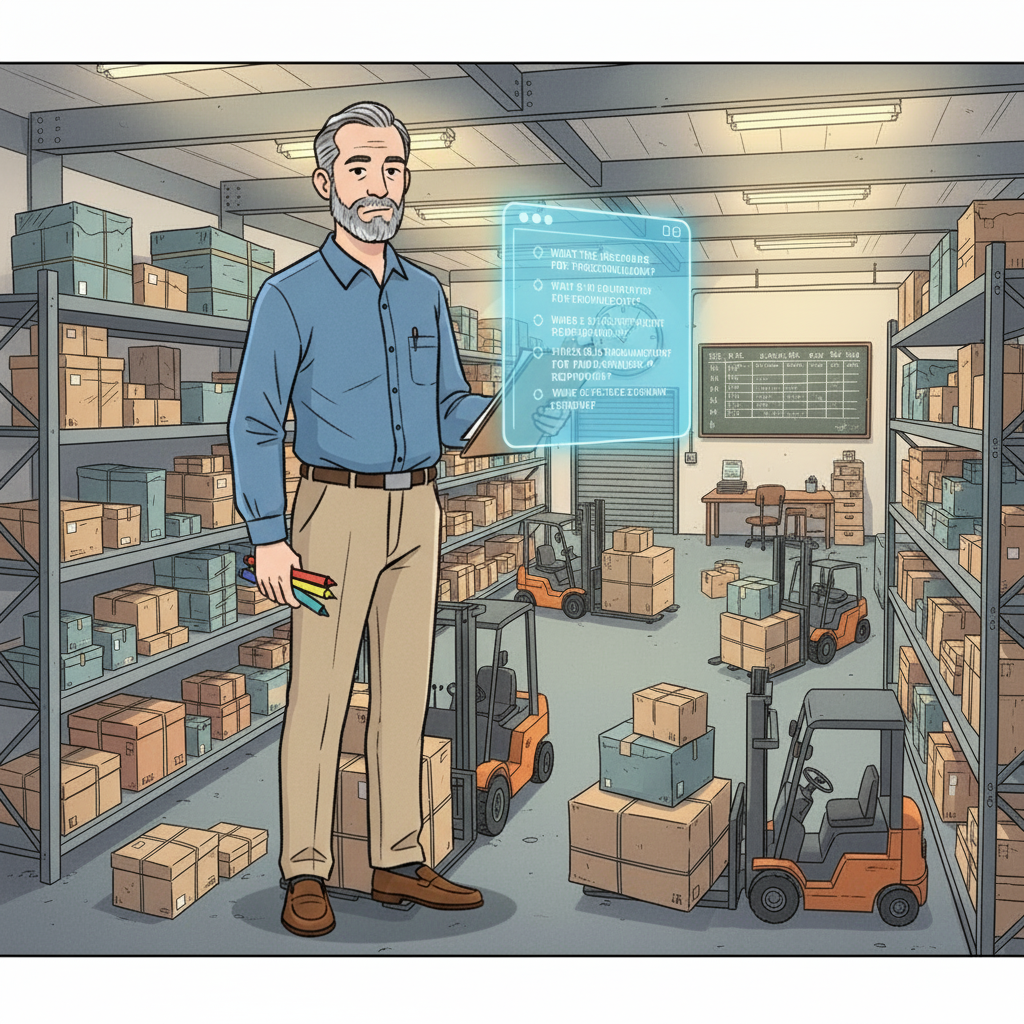
A structured Knowledge Transfer Report, manager-ready, in three parts. Illustrative lines below — what a report looks like, not a customer’s report.
“Carrier C will take same-day loads if called before 10am; the dispatcher is the contact, not the rep.”
“Unclear who approves detention charges above $500. Confirm with finance.” Gaps are an intended output; naming them reduces risk.
“International customs paperwork was not discussed — no session reached it.” Stated plainly, so nobody assumes otherwise.
Open questions first, then follow-ups where the answer thins out.
Names, history, and what each one is good for.
The real fix, not the one in the procedure.
The early signals that never made it into a dashboard.
The private files that leave with the laptop.
Open claims, pending quotes, half-finished changes.
What a distribution operation loses when the person who knew the workarounds leaves.
The Operations Director sample: confirmed facts, open questions, gaps.
One $1,000 credit per offboarding. No subscription. Your first offboarding runs free for 7 days — you buy the credit when you unlock its Knowledge Transfer Report.
What to capture when a warehouse manager gives notice.
Mid-season, usually. You book the first session anyway.
Up to 10 topics, voice or text, paused when the floor needs them.
Each fact is confirmed, edited, or rejected by the person leaving.
Confirmed facts, open questions, what was not covered.
Every open question goes to a name.
Carrier context, the exception playbook, and whatever lives in their personal files. The routing sheets stay; the reasoning behind them goes.
Industry does not decide fit — the role’s knowledge does. A non-regulated role inside a bank, hospital, or other regulated organization can be a strong fit. It’s designed for operational knowledge — process ownership, vendor history, and day-to-day judgment; regulated records and controlled data stay out of scope.
Fit is decided by the role’s knowledge, not the contracts around it — carrier reliability, routing logic, and the history behind current arrangements are in scope, while contract terms and controlled financial data stay out of it.
Multi-session by design: up to 10 structured topics, voice or text, pause and resume anytime, with a total time budget of up to roughly 300 minutes. Time is budgeted, not promised. They can answer by voice while moving, and pick the next topic up on the following shift.
A structured Knowledge Transfer Report: confirmed facts in plain language, explicit open questions and gaps, and a section naming what was not covered. Gaps are intentional outputs, so nobody assumes the picture is complete.
Maintenance managers carry an unwritten service history. A guided interview captures the equipment quirks and vendor reality before they go.
Get a comprehensive handover checklist and practical insights for capturing vital retail knowledge before your ops lead departs.
Ensure vital knowledge transfer with a structured checklist and interview questions for Automation Engineers before they leave.
When food manufacturing staff leave, supplier history and line quirks go with them. A guided interview captures that operational knowledge first.
Utilize our checklist and strategies to capture essential knowledge from Supply Chain Managers before they leave.
When experienced energy staff leave, the operational know-how goes with them. A guided interview captures it while they can still confirm it.