 My Employee is Leaving
Read the story
A short series about what actually left when one person did.
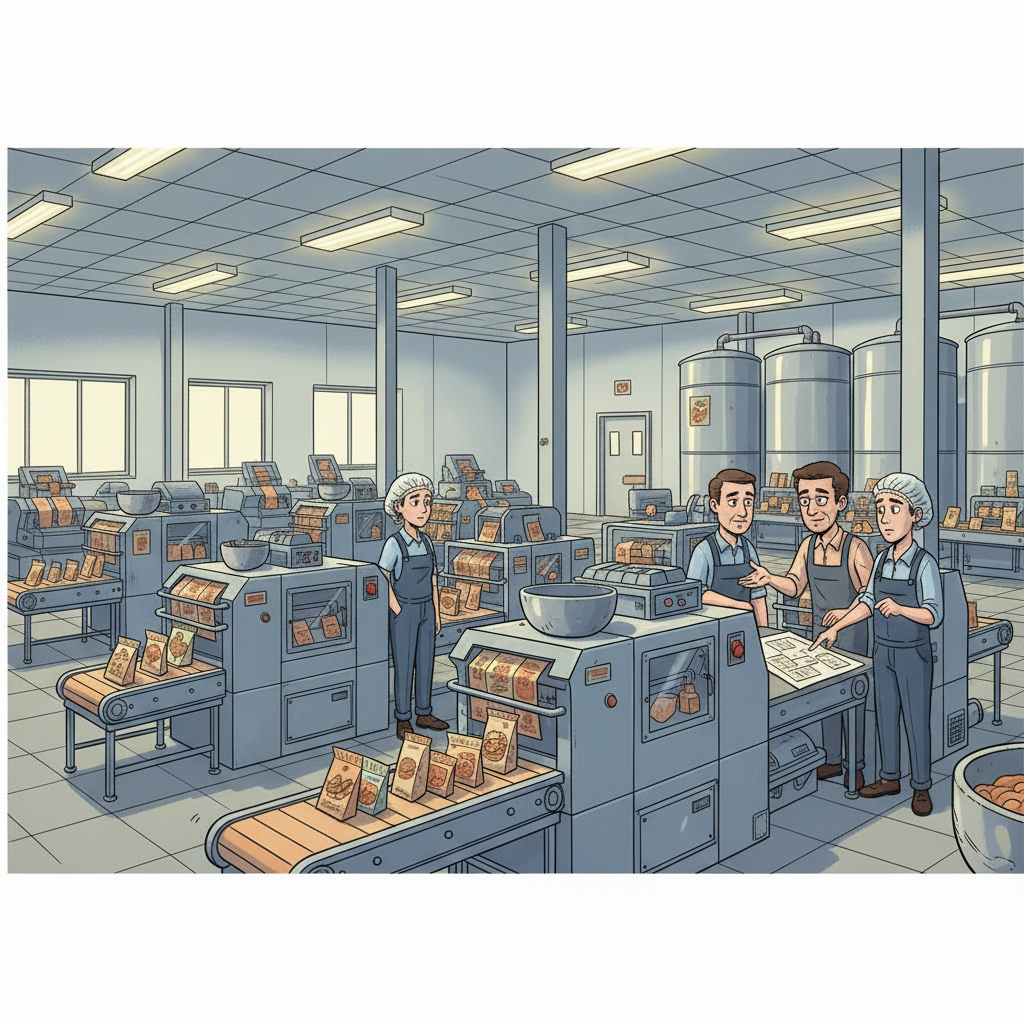
A critical blending machine fails, and no one knows how to fix it.

Quality control checks are compromised, risking customer safety.
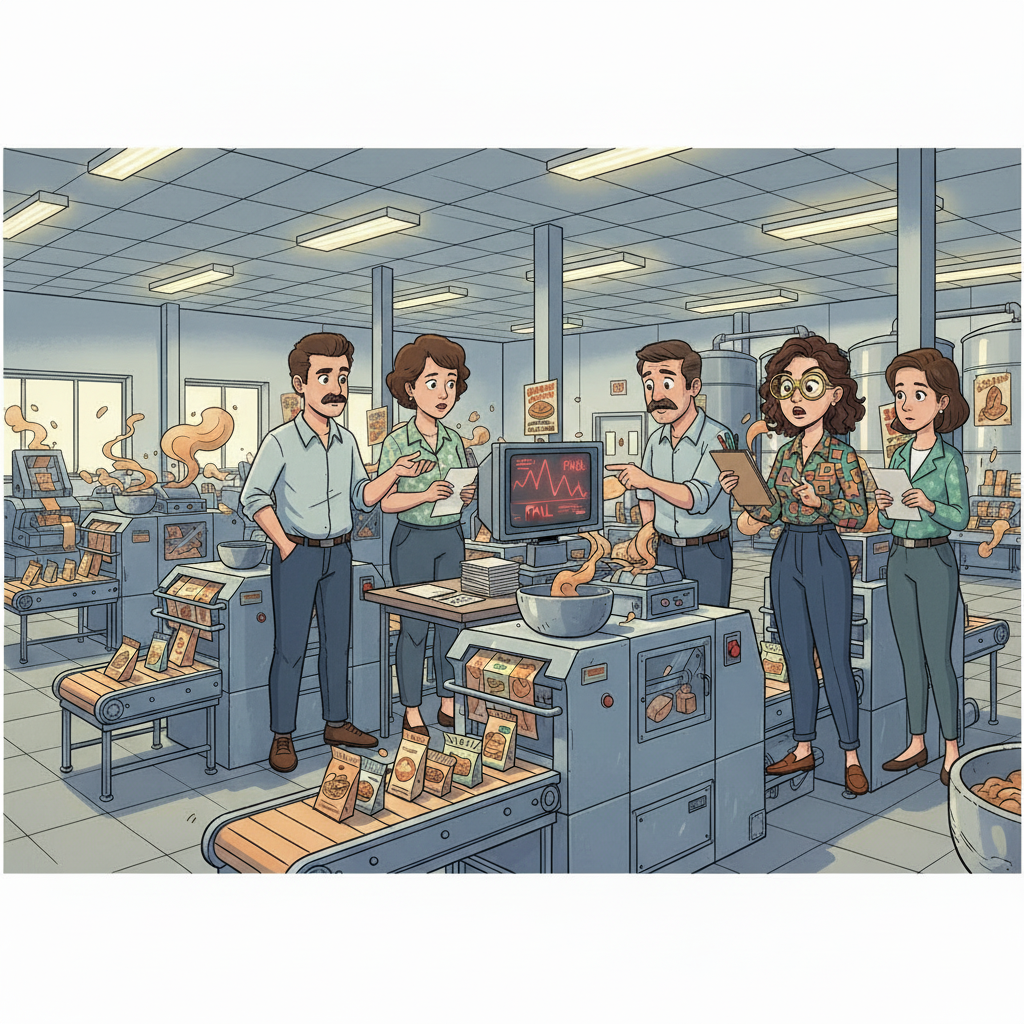
Vital production information gets lost in translation.
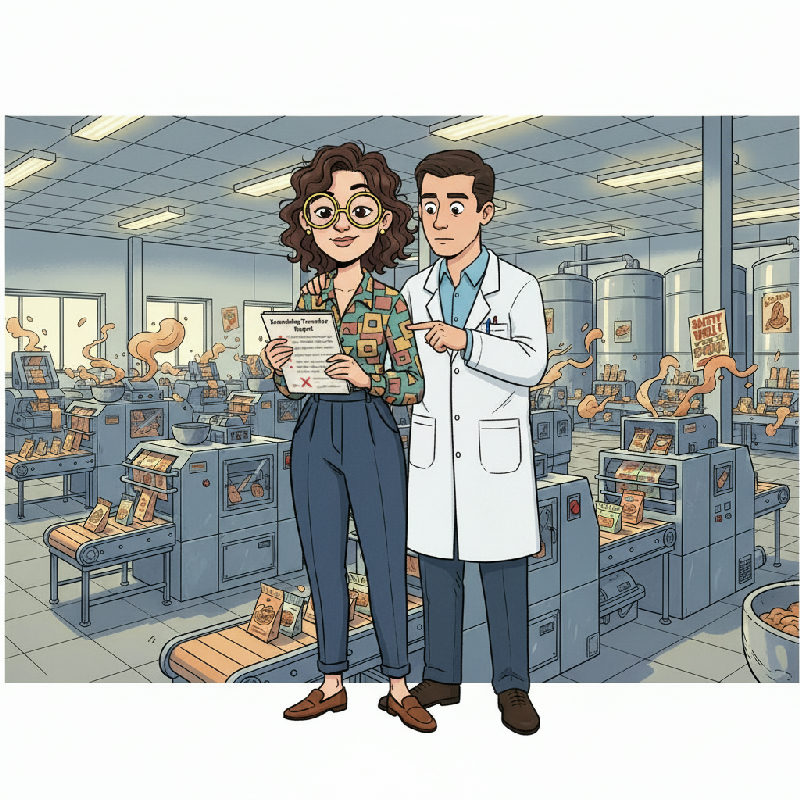
The blender’s quirks and allergen checks, in the Knowledge Transfer Report — two items still open.
In food manufacturing, the plans and records stay on the shelf — what leaves is the person who knew which supplier ships clean paperwork, which line runs hot in humid weather, and who to call at 6am. A guided interview captures that operational memory, confirmed by them, before their notice runs out.
Notice just landed. Two weeks, maybe three, and the line does not stop for any of it.
The plans and records are fine. What leaves is the person who knew that one supplier’s paperwork arrives clean and another’s needs checking twice, that the filler drifts in humid weather, and who to phone at 6am.
Then a delivery is short, or a line behaves oddly, and the answer that used to take one phone call takes three days. Capturing the reasoning first reduces that risk. It does not remove it.
The real inventory is not the equipment list. It is the pattern recognition built up over years of runs.
It is a guided conversation, voice-first, and the employee picks voice or text. Voice tends to win on a plant floor: people talk about a line more easily than they write about it.
Mention a supplier and the interview asks for the history. Mention a recurring problem and it asks what you actually do about it, which is rarely what the procedure says. Every extracted fact then goes back to the employee to confirm, edit, or reject.

Three parts, in plain language. What follows is an illustration of the shape, not a real customer’s report.
“The secondary packer runs slow on the first hour of a long run; the operator steps the speed up in two stages rather than one.”
“He believed the current supplier split dates from a delivery problem two summers ago but could not confirm the detail. Worth asking purchasing.”
“Changeover on the third line was not discussed — the time budget went on the supplier topics instead.”
An open question is a useful output: it tells you where to look next.

The food safety manager guide covers the same ground from the role’s side. A sample report shows the output.
Five questions a guided offboarding interview puts to a production or safety lead, and why each one matters.
Supplier behaviour and its backstory are the fastest things to lose and the slowest to rebuild.
Recurring problems have informal fixes that never reach a procedure.
The order of checks is judgment, and it saves the next person a shift of guessing.
The escalation path people actually use rarely matches the one on the wall.
It surfaces the knowledge that is invisible precisely because it is routine.
A short series about what actually left when one person did.
A full Knowledge Transfer Report for an Operations Director, start to finish.
One $1,000 credit per offboarding. No subscription. Your first offboarding runs free for 7 days — you buy the credit when you unlock its Knowledge Transfer Report.
The same ground, seen from the role rather than the plant.
The manager learns the key employee is leaving and initiates the knowledge transfer process.
The interview is booked while the person is still on shift, slotted between runs so the conversation isn’t cut short by the line.
The session draws out supplier history, how each line behaves in humid weather or on a long run, and the 6am call order nobody ever wrote down.
A structured Knowledge Transfer Report is produced from the confirmed facts, with open questions and a section on what was not covered.
The incoming supervisor and the manager walk the report together on the floor, close the open questions, and confirm supplier and changeover detail before the last shift.
Operational clarity. The records stay; the reasoning behind them leaves. A guided interview captures supplier history, line behaviour, and the escalation habits nobody wrote down, confirmed by the person who holds them.
Industry does not decide fit — the role’s knowledge does. A non-regulated role inside a bank, hospital, or other regulated organization can be a strong fit. It’s designed for operational knowledge — process ownership, vendor history, and day-to-day judgment; regulated records and controlled data stay out of scope.
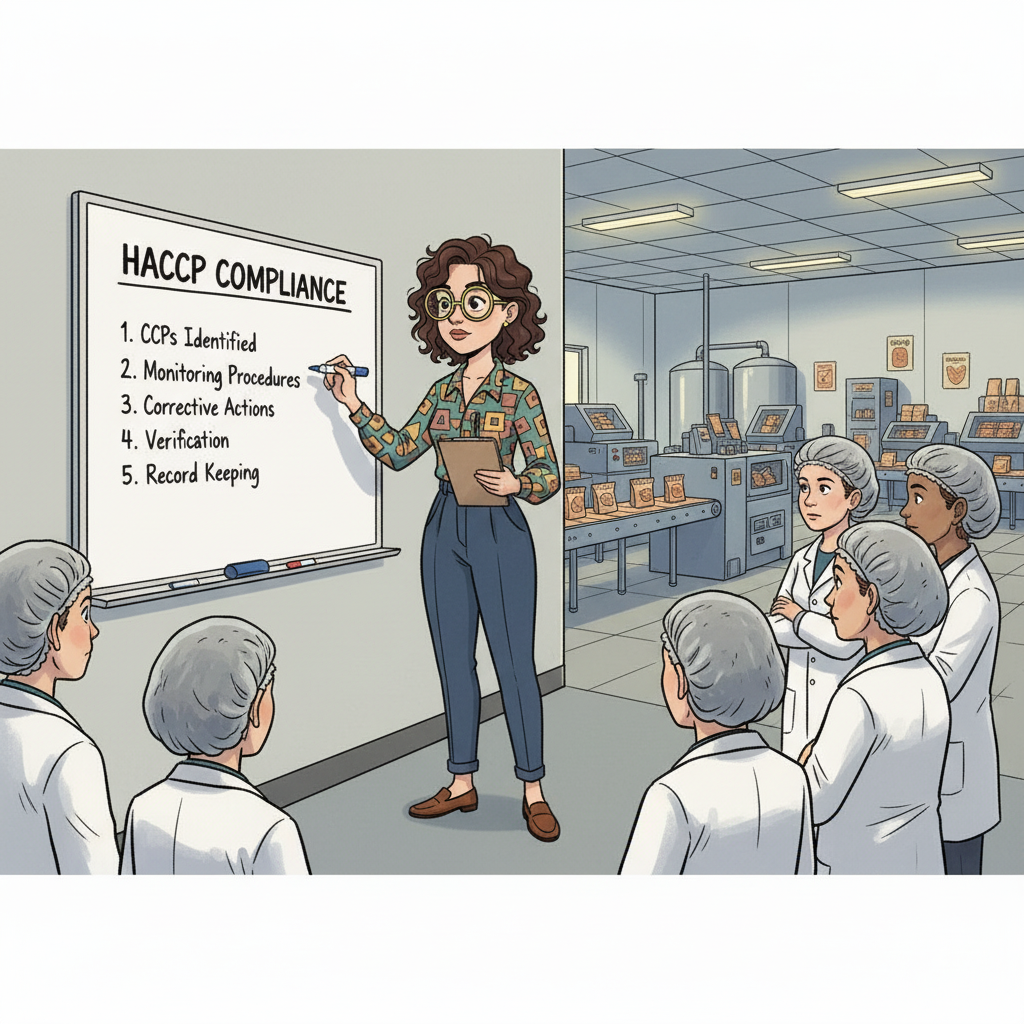
Fit is decided by the role’s knowledge, not the plant around it — operational knowledge like supplier history and line behaviour is in scope, while HACCP records and controlled audit data stay out of it. The interview asks how the work is actually done and why, and the report is written for manager review.
Multi-session by design: up to 10 structured topics, voice or text, pause and resume anytime, with a total time budget of up to roughly 300 minutes. Time is budgeted, not promised. On a plant that usually means short sessions between shifts rather than one long booking.
Then the report says so. Anything they cannot remember or confirm is listed as an open question rather than filled in for them. That is deliberate: a named gap can be handed to someone, and a smoothed-over one cannot.
Access a structured checklist and actionable insights for effective knowledge transfer in logistics when a key member departs.
Capture essential knowledge when a Food Safety Manager departs. Get practical checklists, interview questions, and risk assessments.
Capture vital knowledge from your Production Supervisor with structured interviews and Knowledge Transfer Reports for seamless offboarding.
Ensure a seamless transition with our checklist for Manufacturing Process Engineer knowledge transfer, capturing critical operational processes.