 My Employee is Leaving
Sales Forecasting Techniques
Essential for projecting revenue and planning resources based on actionable insights.

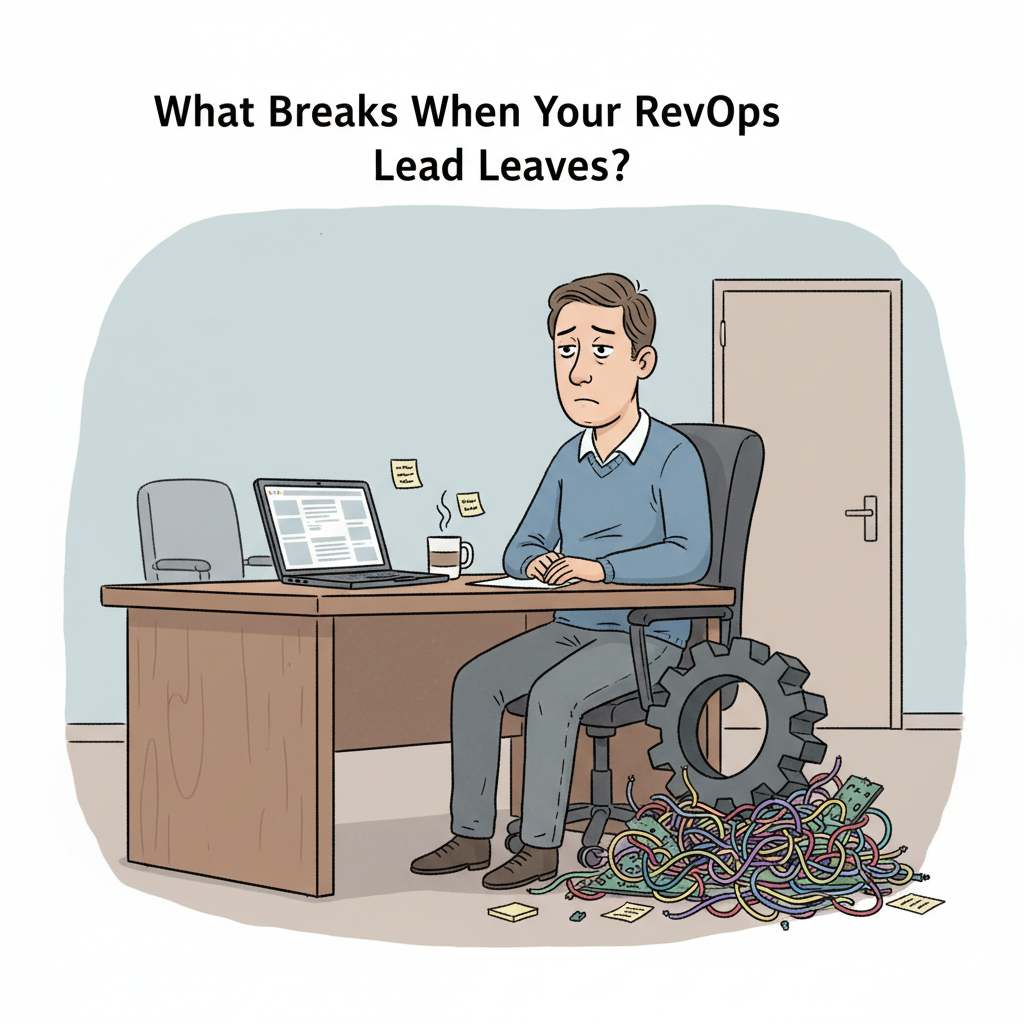
The clock is ticking as the RevOps lead prepares to leave.

Important pipeline details are slipping through the cracks during a frantic last-minute call.

The team struggles to understand the pipeline without clear documentation.

What happens now as the door closes on critical operational insights?
Loss of strategic insights into sales pipeline management often leads to decreased productivity and missed opportunities.
Prioritize documenting the logical flow of the sales pipeline, critical metrics, and ongoing deals.
Undocumented workarounds and decisions made during the sales process often create gaps in operational continuity.
Initiate a structured handover process to capture all vital operational knowledge before the RevOps Lead's last day.
When your RevOps Lead departs, the disruption extends beyond vacant positions.
The intricacies of customer relationships, ongoing negotiations, and sales tactics often get miscommunicated or fall entirely off the radar. For example, if the lead had specific insights into customer nuances or vendor relationships, the team might struggle to replicate that success.
Loss of contextual knowledge can impede the team's ability to meet sales targets.
Access to vendor agreements and their implications may become blurred.
Ongoing deals can stall as newly assigned personnel grapple with the loose ends.
A departure can disrupt established dynamics within the sales team, leading to confusion and delays in the sales cycle. Team members may find it daunting to pick up the pieces, especially in areas where they relied heavily on the lead’s expertise.
The absence of leadership guidance can create uncertainty.
Potential rifts may develop due to unclear responsibilities.
Confidence in the sales process may wane, affecting overall morale.
The RevOps lead typically manages several critical systems for tracking pipeline performance, such as CRMs and sales reporting tools.
CRM Tools like Salesforce might lack the necessary context to ensure smooth handoffs.
Reporting dashboards that display key metrics may not be intuitive for those without experience.
Internal documentation can become outdated, leading to poorer strategic decision-making.
Understanding the depth of knowledge that a RevOps Lead holds reveals critical insights necessary for sustaining pipeline functions.
When this knowledge isn’t captured during the transition, significant operational risks arise:
RevOps leads routinely manage:
Losing this proficiency can lead to missed revenue opportunities and inefficient processes.

To effectively capture knowledge loss when your RevOps Lead leaves, asking the right questions is crucial:
Identifying dependencies that often go unnoticed will enhance your post-departure strategy:
Involving an AI interview during this process helps ensure that details are captured systematically, providing a clearer handoff and maintained continuity.

A structured knowledge transfer report encapsulates essential insights that a RevOps Lead carries, including:
By aggregating these insights, organizations can navigate the challenges ensuing from the departure more effectively, ensuring operations run continuously and smoothly despite the changes in personnel.

When the RevOps Lead departs, the operational impact can be profound. Teams may face:
These common challenges highlight the need for a robust knowledge transfer strategy to mitigate adverse effects.

An actionable guide to ensure no vital knowledge slips through the cracks before the RevOps Lead departs.
Map out customer journeys and ensure everyone understands the current status of each deal.
Establish clear definitions of KPIs as understood by the RevOps Lead to ensure consistency in performance evaluations.
Ensure all vendor relationships and existing contracts are documented clearly to prevent communication gaps.
Outline best practices and processes that were developed outside of standard operating procedures.
Develop a plan for how team members should address issues in the absence of the RevOps Lead.
Set meetings to review the transitional strategies and address any lingering questions or concerns.
Essential for projecting revenue and planning resources based on actionable insights.
Key to maintaining partnerships that support the sales pipeline's success.
Ensures consistent measurement of success across sales operations.
The manager learns the RevOps / Sales Ops is leaving and initiates the knowledge transfer process.
An AI-guided interview session is scheduled with the departing RevOps / Sales Ops to systematically capture institutional knowledge.
The AI interview extracts undocumented workflows, vendor relationships, decision rationale, and operational edge cases.
A structured knowledge transfer report is produced, covering all critical domains, handover checklists, and risk areas.
The team reviews the report, identifies remaining gaps, and completes the handover before the departure date.
The organization risks losing critical insights into sales pipeline management, which can disrupt team performance and client relations.
Conducting structured interviews focused on essential processes and ad hoc methodologies helps retain what's no longer visible.
A focused knowledge transfer session can be effectively conducted within the requisite notice period to minimize disruption.
Secure critical knowledge from your departing Operations Manager using our comprehensive checklist and insights.
Learn the essential checklist and actionable steps for effective Knowledge Transfer for Retiring Employees before they leave.
When your RevOps or Sales Ops lead leaves, reporting logic and tool configurations are at risk. Capture it all before they walk out the door.
Document operational knowledge through our knowledge transfer checklist and interview questions for Customer Success Managers. Avoid operational loss.
Prevent delivery risk when your Agency Project Lead leaves. Capture client commitments, hidden context, and project-specific knowledge.