 My Employee is Leaving
Read the story
A short series about what actually left when one person did.

Unclear production schedules lead to chaos on the shop floor.
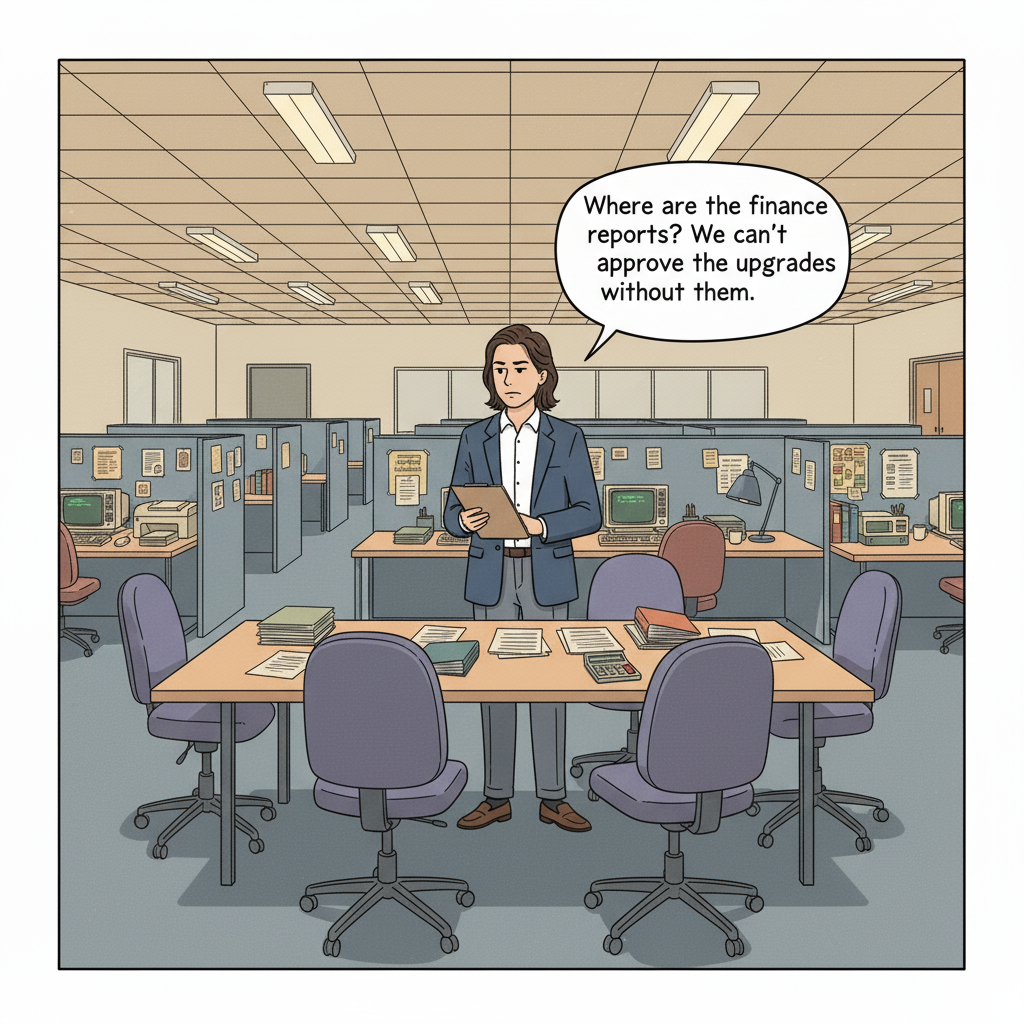
Absence of crucial data and insights causes decision-making paralysis.

Unmanaged vendor relationships disrupt logistics and delay shipments.

Schedule logic and vendor history, in the Knowledge Transfer Report — the judgment calls written down.
In brief: what happens when an Operations Manager leaves?
When an operations manager departs, cross-functional processes and vital workflows can quickly unravel.
Which cross-department workflows should be captured first?
Start with key cross-departmental workflows and systems that are essential for daily operations.
What operational judgment rarely gets written down?
Undocumented workarounds often lead to significant losses when knowledge is not captured.
Where should the first two weeks focus after an operations manager resigns?
Conduct structured interviews to capture the departing operations manager’s core knowledge.
The departure of an operations manager often sends shockwaves through various departments, leading to specific failures:
When the operations manager exits, production schedules can become disorganized, disrupting the entire workflow.
Safety regulations and compliance standards may falter without proper oversight.
Operational knowledge concerning vendor relationships often leaves with the manager.
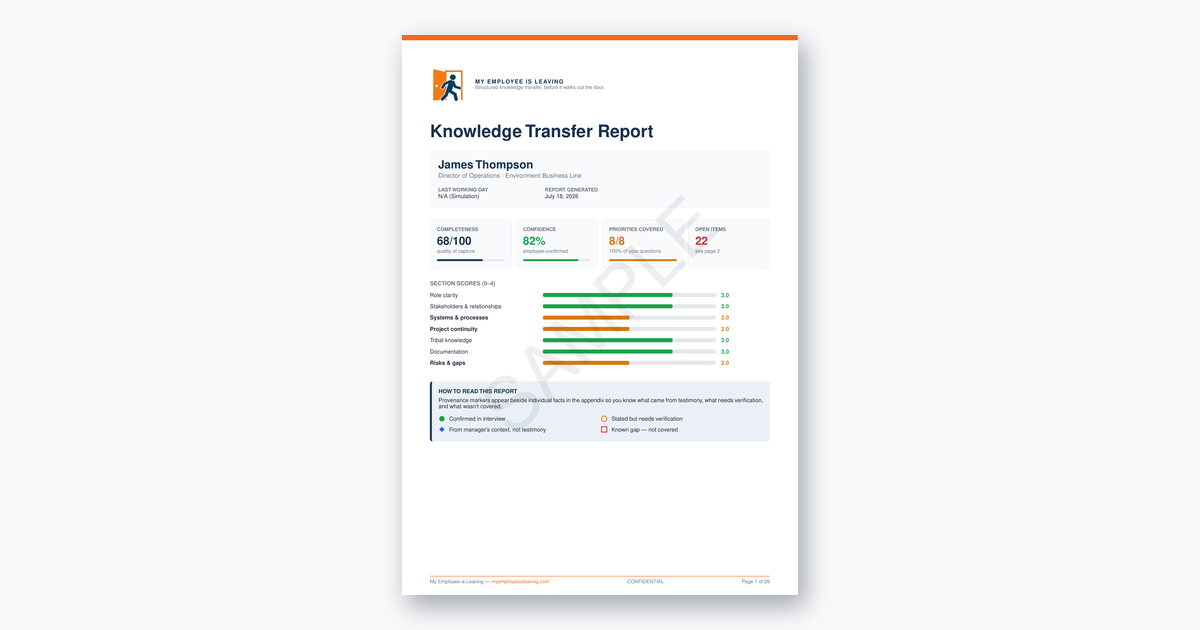
The Knowledge Transfer Report records the scheduling logic, the vendor history and the judgment calls, with the open ones marked.
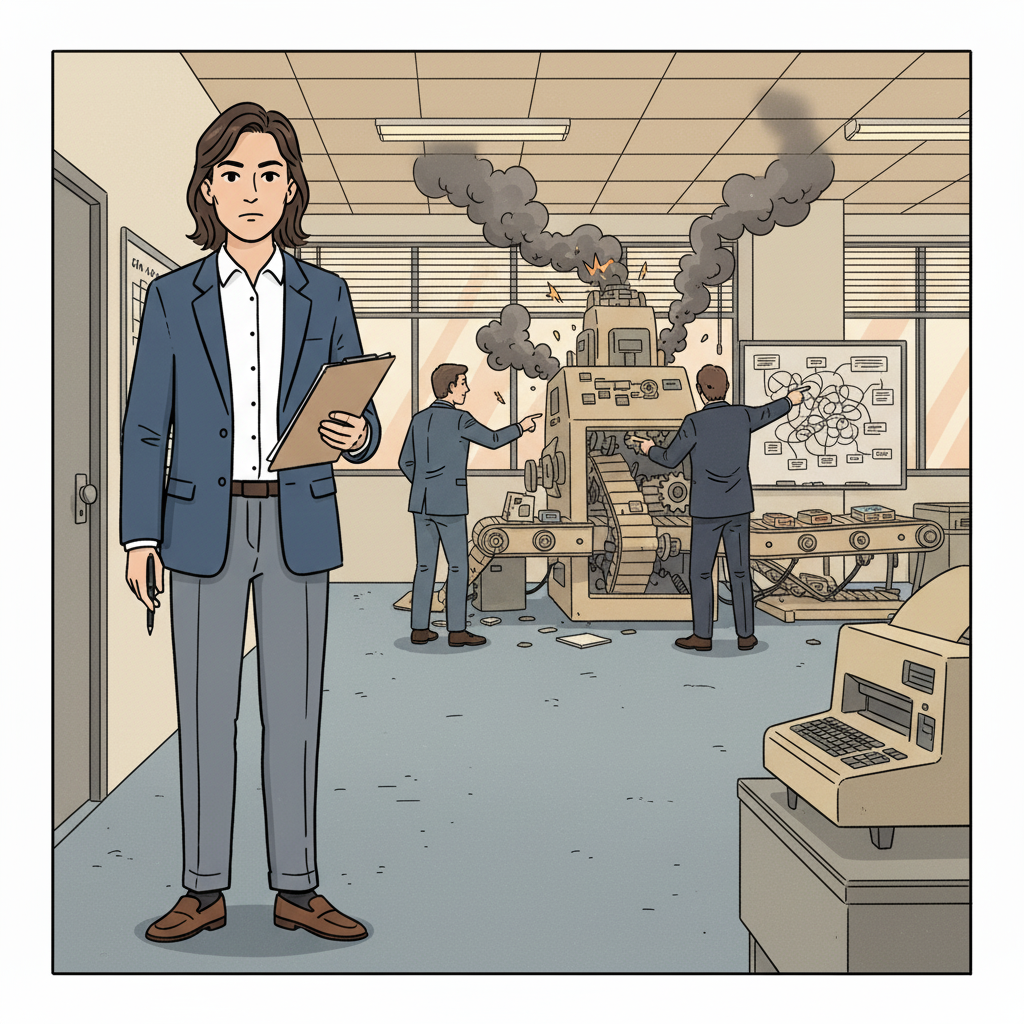
The operations manager possesses critical knowledge areas that ensure smooth business functions. Understanding these areas are vital for a successful transition.
This includes interdepartmental processes that rely on the operations manager for coordination:
Strong connections with vendors prevent service disruptions:
Monitoring various performance metrics provides insights for team effectiveness:
Having these areas thoroughly documented is necessary to continue operations without disruption.

Prompting the departing operations manager effectively ensures vital knowledge capture:
Ask probing questions regarding workflows to uncover dependencies across departments:
Investigation into undocumented practices can reveal hidden knowledge:
Gaining insights on vendor management will safeguard supply chains:
These targeted inquiries help in constructing a complete view of the operational landscape, significantly minimizing disruption.

The knowledge transfer report becomes a crucial document for maintaining operational integrity after the departure of the operations manager.
This includes detailed descriptions of processes that should be followed:
Documenting cross-functional workflows to ensure seamless transitions.
Clear guidelines on vendor management for ongoing relationships.
Identifying potential risks stemming from knowledge gaps is essential:
Outlining compliance checks to prevent safety issues.
Analyzing areas prone to gaps due to undocumented workflows.
A structured checklist facilitates onboarding new operations managers:
Key contacts for vendors and internal teams.
Essential approvals routes and decision-making processes.
Constructing a thorough report is key to minimizing operational disruptions and ensuring long-term success.

We generated a full Knowledge Transfer Report for a fictional Director of Operations — 26 pages covering in-flight projects, stakeholder relationships, and the judgment calls that never made it into documentation. 8 of 8 manager questions answered, 22 open items flagged before the last day.
Actionable steps for a smooth transition when an operations manager leaves.
Use existing project management tools to outline specific processes that rely on multiple departments.
Include all vendor contacts, contract terms, and key interfacing procedures that ensure service continuity.
Ensure checklists and reports are updated, including a detailed summary of outstanding compliance issues.
Identify vital statistics like OEE and OTIF, including any informal metrics that are not recorded but monitored during operations.
Outline who will take over specific responsibilities and how ongoing projects will be managed post-departure.
A short series about what actually left when one person did.
A real Knowledge Transfer Report, start to finish.
One $1,000 credit per offboarding. No subscription. Your first offboarding runs free for 7 days — you buy the credit when you unlock its Knowledge Transfer Report.
What service operations lose in a handover.
The manager learns the Operations Manager is leaving and initiates the knowledge transfer process.
An AI-guided interview session is scheduled with the departing Operations Manager to systematically capture institutional knowledge.
The AI interview extracts undocumented workflows, vendor relationships, decision rationale, and operational edge cases.
A structured knowledge transfer report is produced, covering all critical domains, handover checklists, and risk areas.
The team reviews the report, identifies remaining gaps, and completes the handover before the departure date.
The departure creates gaps in communication, workflow inconsistencies, and potential safety risks due to undocumented processes.
Fit is decided by what the role knows, not the industry around it. A non-regulated operations role inside a regulated organization is often a strong fit. It’s designed for operational knowledge — supplier context, escalation order, and the judgment behind daily decisions; regulated records and controlled data stay out of scope.
By conducting structured interviews and capturing key workflows and vendor relationships, organizations ensure vital information isn’t lost.
It’s multi-session by design, not a single sitting. An offboarding can cover up to ten structured topics with a total interview budget of around 300 minutes — in voice or text, paused and resumed around the person’s actual work. Time is budgeted, not promised: if topics don’t complete, the report says so rather than filling the gap.
Get a comprehensive handover checklist and practical insights for capturing vital retail knowledge before your ops lead departs.
Explore a detailed guide on handling knowledge transfer when your founder hands off operations, including crucial documentation strategies.
In financial services, ops and back-office memory walks out with the person. A guided interview captures the reasoning, confirmed fact by fact.
Capture crucial knowledge seamlessly when a SaaS team member leaves. Get operational playbooks, decision rationale documentation, and more.
Explore industry-specific strategies for effective knowledge transfer before employee departures. Capture critical insights easily!
Access a checklist and interview questions essential for effective knowledge transfer in professional services, ensuring operational continuity.