 My Employee is Leaving
Read the story
What a firm loses when the person the client trusted resigns.

When key details slip through the cracks, project chaos follows.
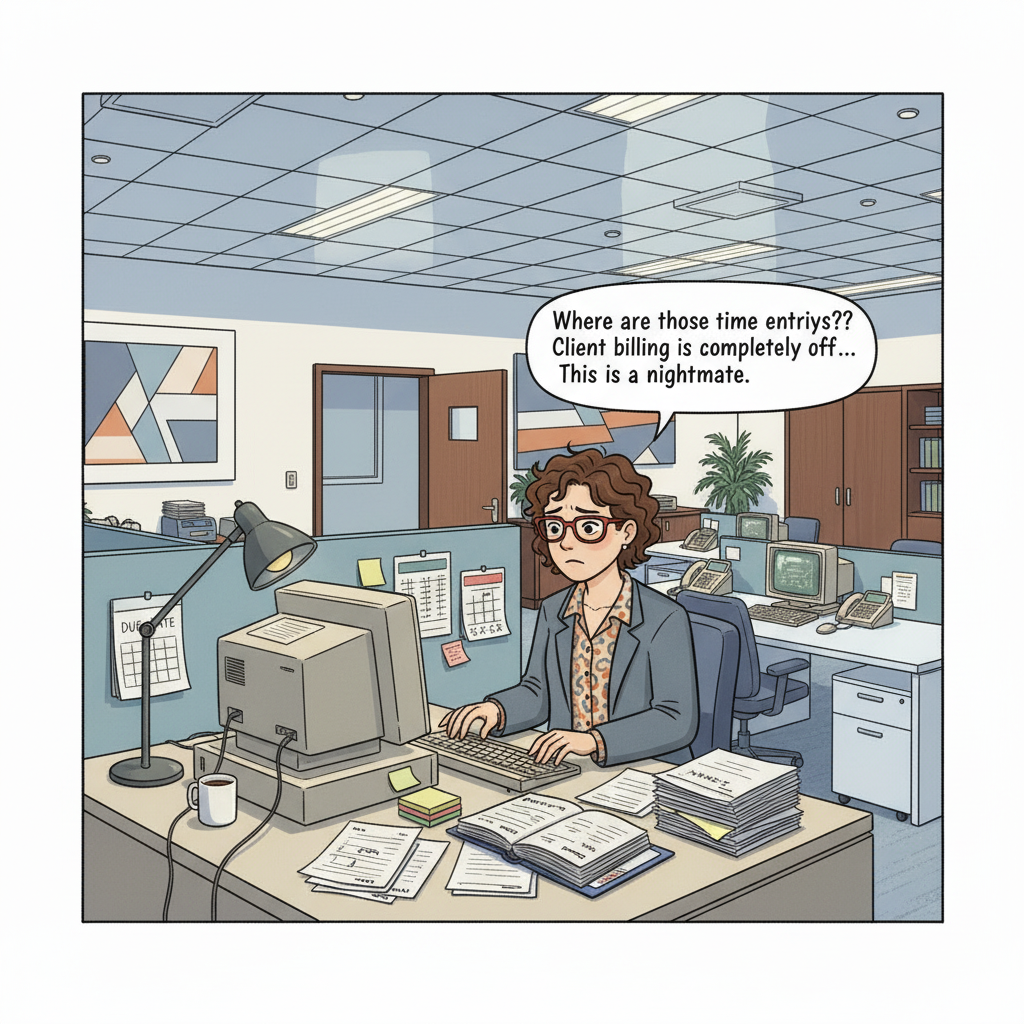
Lost insights lead to missed deadlines and eroded client trust.

Inconsistent billing practices lead to financial losses.

The client history and the spreadsheets’ logic are in the Knowledge Transfer Report; open items named.
In professional services, the deliverables live in shared drives — but the client goes to a person. When that person resigns, the relationship history, the unwritten preferences, and the 'how we really run this account' leave too. A structured interview captures it, confirmed by the person leaving.
The client-by-client picture, starting with the accounts where the relationship is the reason the work continues.
The soft edges — preferences, sensitivities, and the history that explains why a client reacts the way they do.
Get the account context out first, while there is still time to make an introduction.
The notice lands. Every file is where it should be, which is exactly why nobody panics early enough.
The client called them, not the firm. The next person inherits an email address and a rate card.
Something was promised on a call. It shapes the client’s expectations and appears in no document.
Why the scope changed. Which deliverable was quietly rewritten. What almost ended the relationship in year two.

Timesheets and deliverables record output. They don’t record the relationship.
A guided offboarding interview goes after that layer, voice or text, the employee’s choice. They confirm, edit, or reject every fact before it reaches a report.

A departing consultant is usually still billing. Multi-session by design: up to 10 structured topics, voice or text, pause and resume anytime, with a total time budget of up to roughly 300 minutes. Time is budgeted, not promised.
Short sessions between client calls, resumed the next day. Designed for real departures, not for a quiet week that never arrives.

A structured Knowledge Transfer Report, manager-ready, in three parts. Illustrative lines below — what a report looks like, not a customer’s report.
“The client’s finance director signs off, not the programme manager; send figures a week early.”
“Unclear whether the discount on the renewal was agreed in writing. Confirm with the client.” Gaps are an intended output; naming them reduces risk.
“Two smaller accounts were not discussed — no session reached them.” Stated plainly, so nobody assumes otherwise.

Open questions first, then follow-ups where the answer thins out.
The map behind the org chart.
Commitments the client remembers regardless.
Cadence, tone, and what irritates them.
Old friction, resolved and unresolved.
The threads someone has to pick up.
What a firm loses when the person the client trusted resigns.
The Operations Director sample: confirmed facts, open questions, gaps.
One $1,000 credit per offboarding. No subscription. Your first offboarding runs free for 7 days — you buy the credit when you unlock its Knowledge Transfer Report.
What to capture when a project lead or client owner gives notice.
You book the first session before the diary fills up.
Up to 10 topics, voice or text, paused when work needs them.
Each fact is confirmed, edited, or rejected by the consultant.
Confirmed facts, open questions, what was not covered.
Every open question goes to a name.
Relationship context. Files and deliverables stay; the stakeholder map, the verbal commitments, and the history behind the engagement leave unless somebody asks in time.
Industry does not decide fit — the role’s knowledge does. A non-regulated role inside a bank, hospital, or other regulated organization can be a strong fit. It’s designed for operational knowledge — process ownership, vendor history, and day-to-day judgment; regulated records and controlled data stay out of scope.
Fit is decided by the role’s knowledge, not the matters around it — client relationship history, delivery rhythms, and escalation paths are in scope, while privileged material and client records stay out of it.
Multi-session by design: up to 10 structured topics, voice or text, pause and resume anytime, with a total time budget of up to roughly 300 minutes. Time is budgeted, not promised. Sessions sit between client calls rather than competing with them.
A structured Knowledge Transfer Report: confirmed facts in plain language, explicit open questions and gaps, and a section naming what was not covered. It reduces transition risk; it doesn’t claim to cover everything.
Document operational knowledge through our knowledge transfer checklist and interview questions for Customer Success Managers. Avoid operational loss.
Explore a detailed guide on handling knowledge transfer when your founder hands off operations, including crucial documentation strategies.
A QA manager's real value is knowing which defect matters. A guided interview captures that judgment before they leave, confirmed by them.
Discover strategies for knowledge transfer after a sudden resignation, ensuring critical operational continuity and relationship preservation.
When your IT or systems admin leaves, the setup reasoning and vendor contacts go too. A guided interview captures that context, never the secrets.
Secure critical knowledge from your departing Operations Manager using our comprehensive checklist and insights.