 My Employee is Leaving
Read the story
A short series about what actually left when one person did.
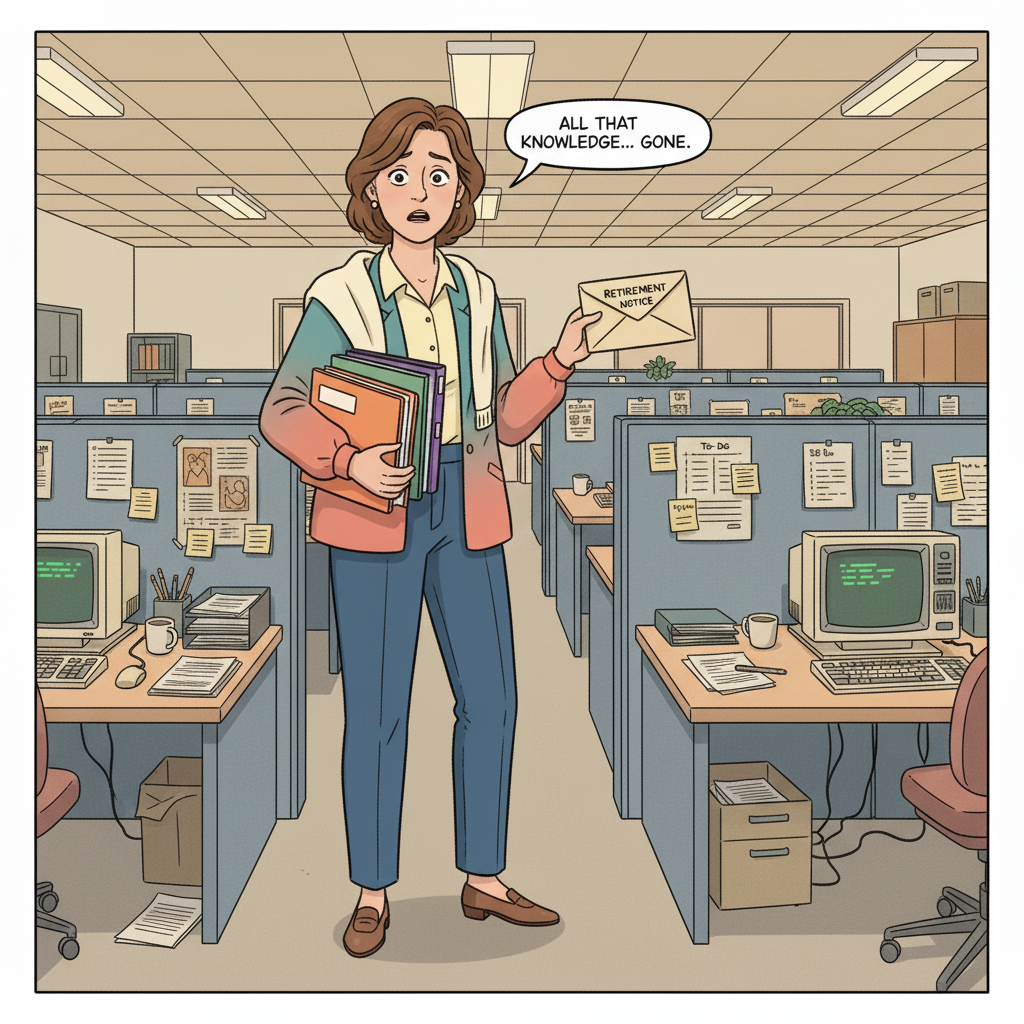
The pressure mounts as critical knowledge slips away.
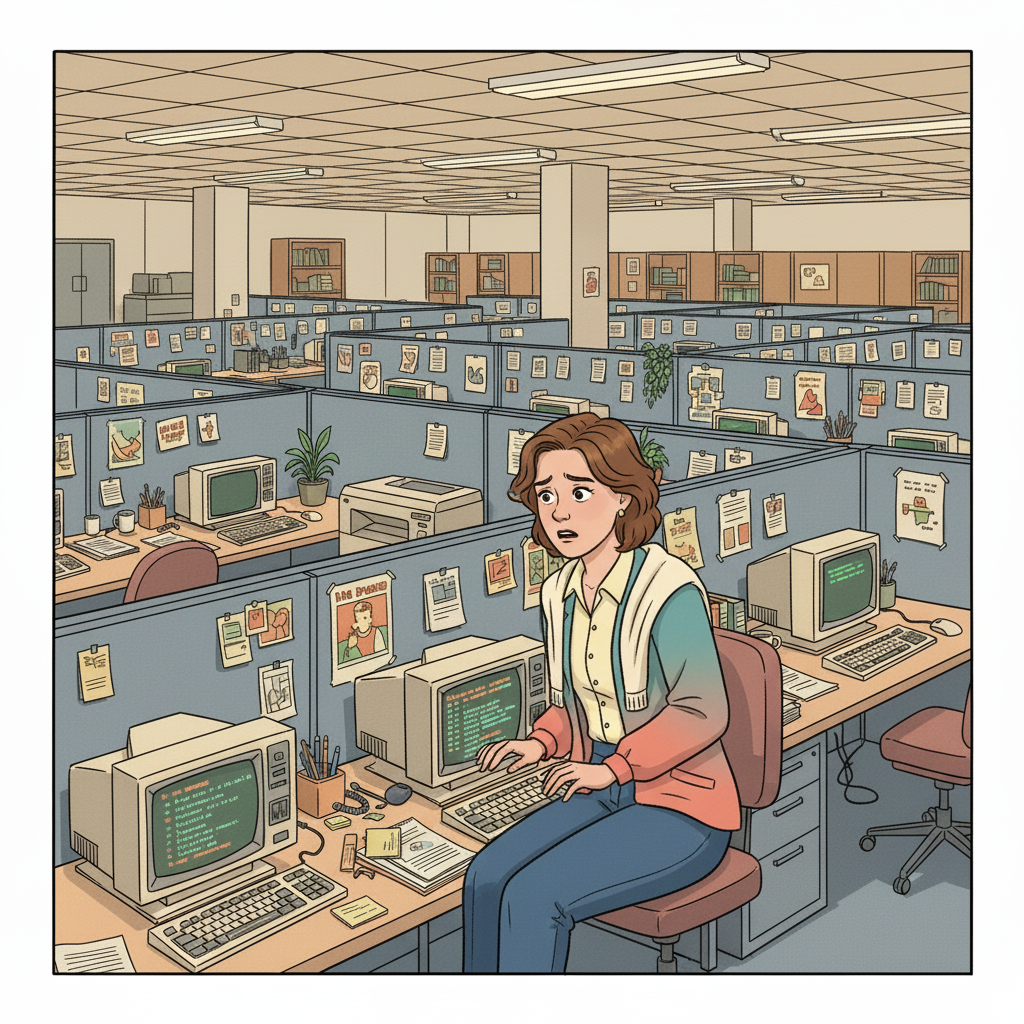
Customer inquiries stall without the necessary insights.
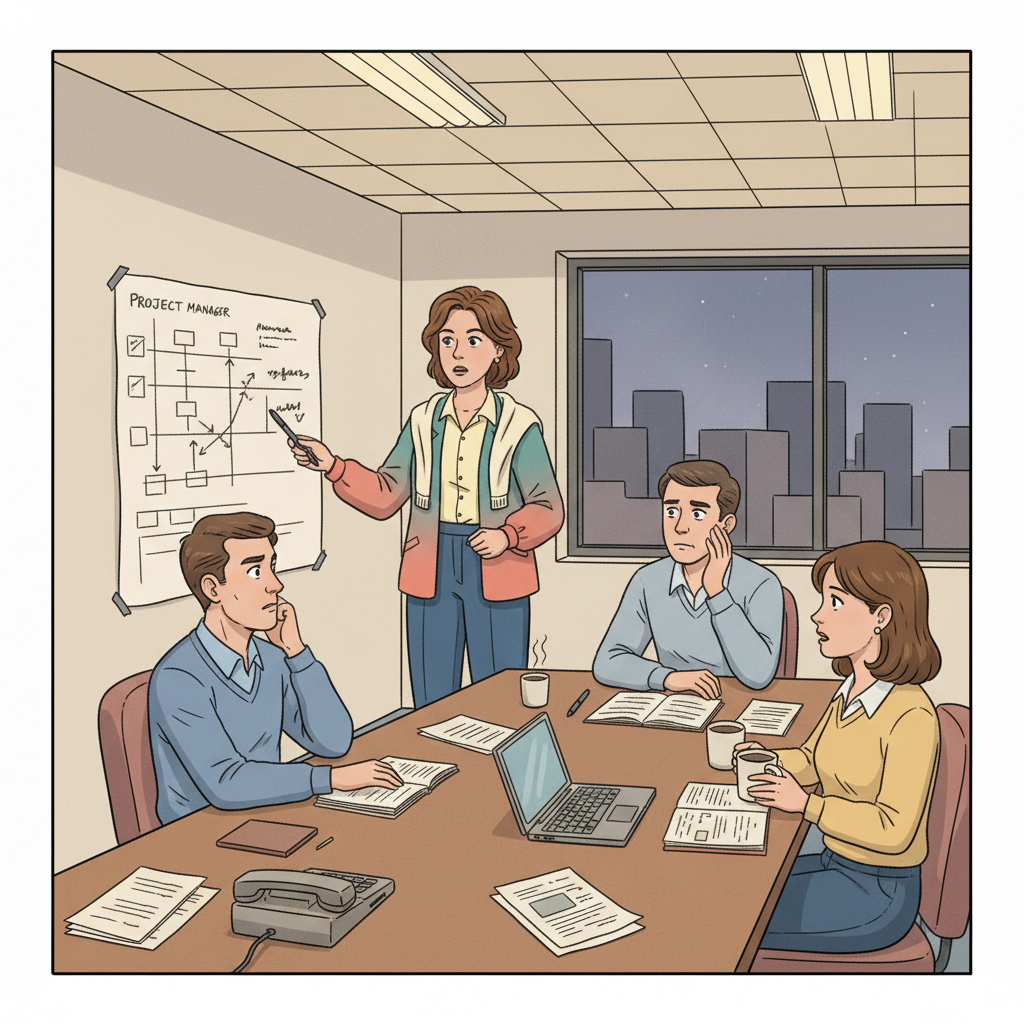
The team grapples with incomplete project handovers.

Decades of process history, in the Knowledge Transfer Report — what still needs asking, listed.
Retirement leads to a substantial loss of institutional knowledge, impacting operations and team morale.
Prioritize documenting historical decision processes and critical operational workflows.
Many undocumented workarounds and informal processes disappear, leading to knowledge gaps.
Establish a knowledge transfer plan and initiate structured interviewing sessions with the retiring employee.
When employees retire, several critical functions within the organization can experience significant hiccups, including:
The absence of documented processes leads to daily disruptions:
Trust issues may arise:
With critical knowledge gone, operations are hindered:
The Knowledge Transfer Report captures decades of process history and the relationships behind it, with what still needs asking listed.
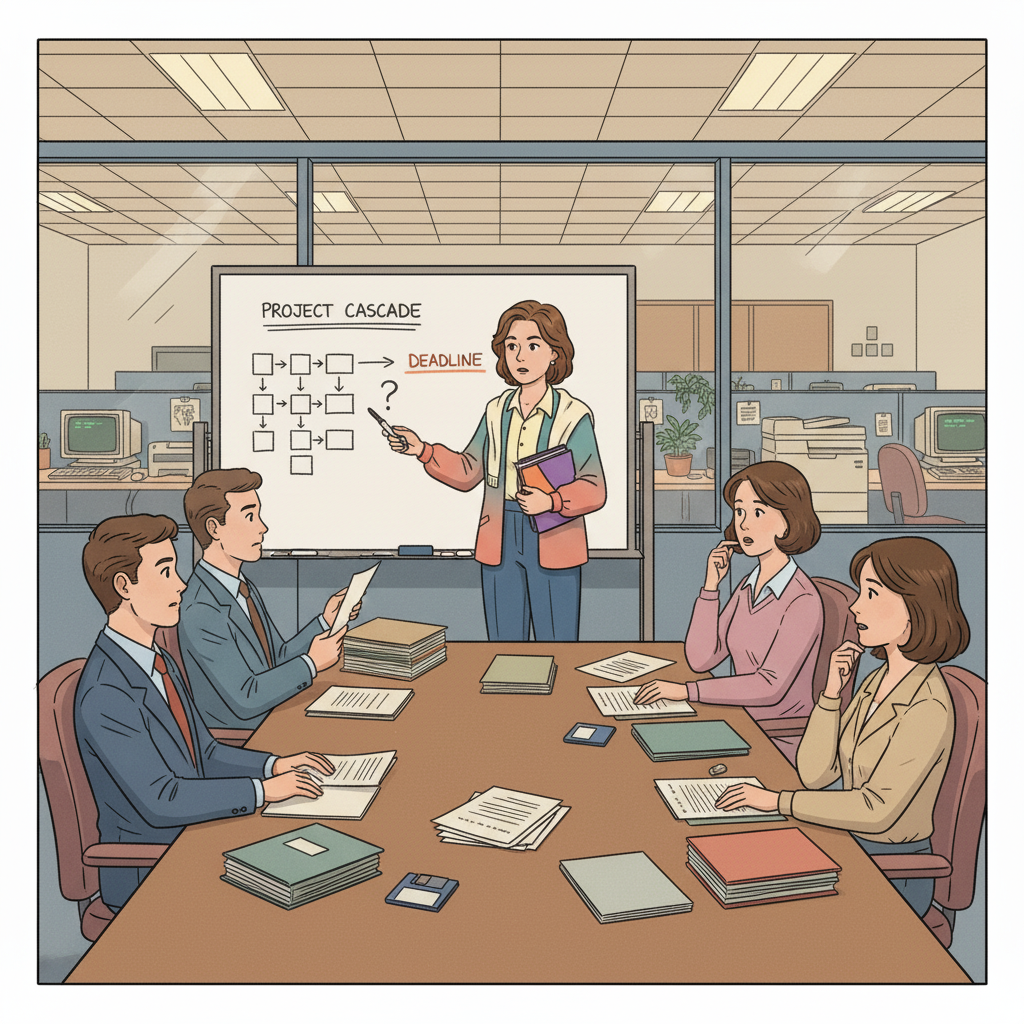
The retiring employee holds invaluable institutional knowledge that spans various domains. Here’s what needs to be covered:
Succession Planning: Ensures future team members can step into roles without disruption.
Client Onboarding Processes: Smooth transitions help maintain client confidence and satisfaction.
Cultural Knowledge: Understanding team dynamics and values that drive the workplace environment.
Proper documentation becomes essential:
Process Documentation: Enabling clear guidelines for project handovers and daily routines.
Historical Context: Capturing the rationale behind key decisions aids future growth.
The reasoning: Why long-standing processes exist, in the retiree’s own words.
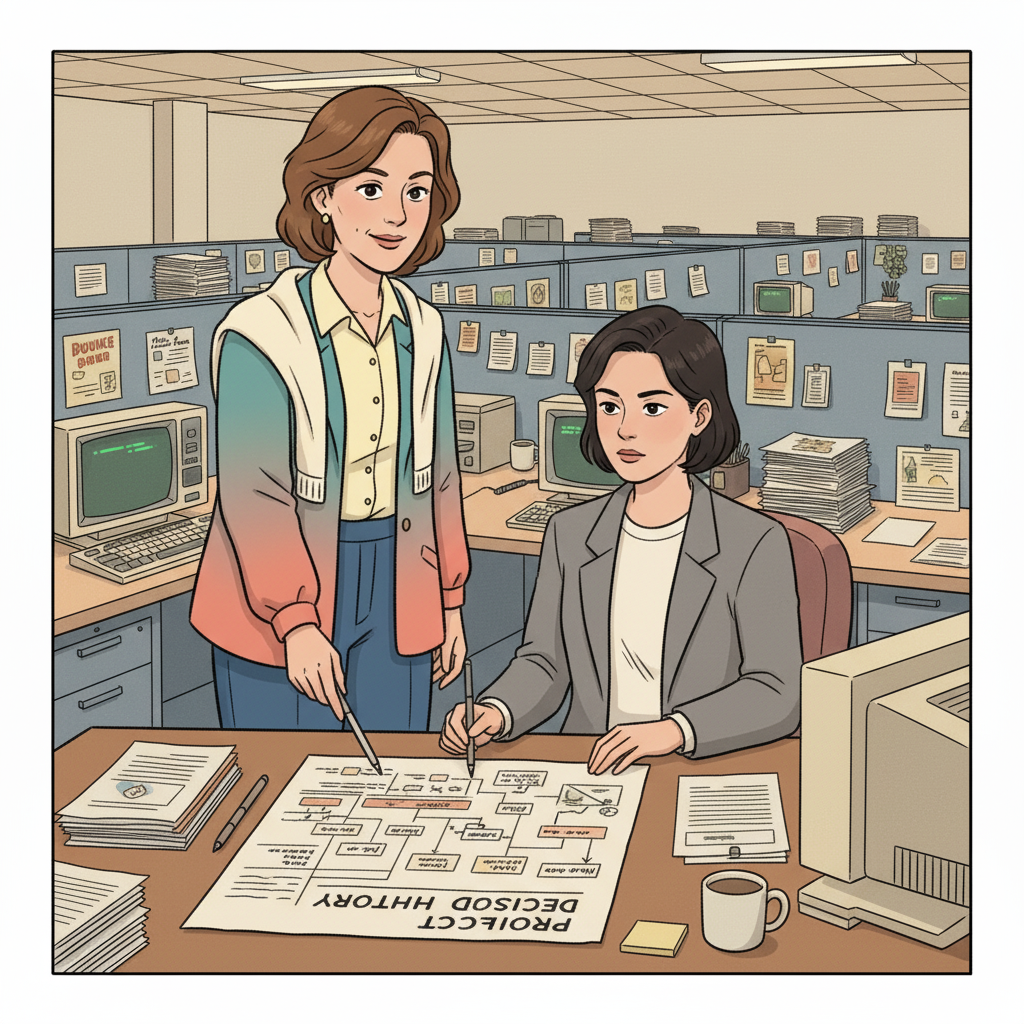
Establishing a structured approach to knowledge transfer requires specific questions to unlock vital insights:
What historical contexts do you think are essential for future decisions?
Which relationships and networks need to be passed on for client care?
What undocumented processes should future team members be aware of to prevent issues?
How do you determine priority during peak project seasons? These questions will unearth crucial knowledge that may have been informal or undocumented.
Identify shadow systems used for daily tasks and reporting.
Discuss the tools and systems where knowledge actually lives, whatever your team uses.
Map out dependencies that involve IT support and external vendors, so the handover is smooth when they retire.
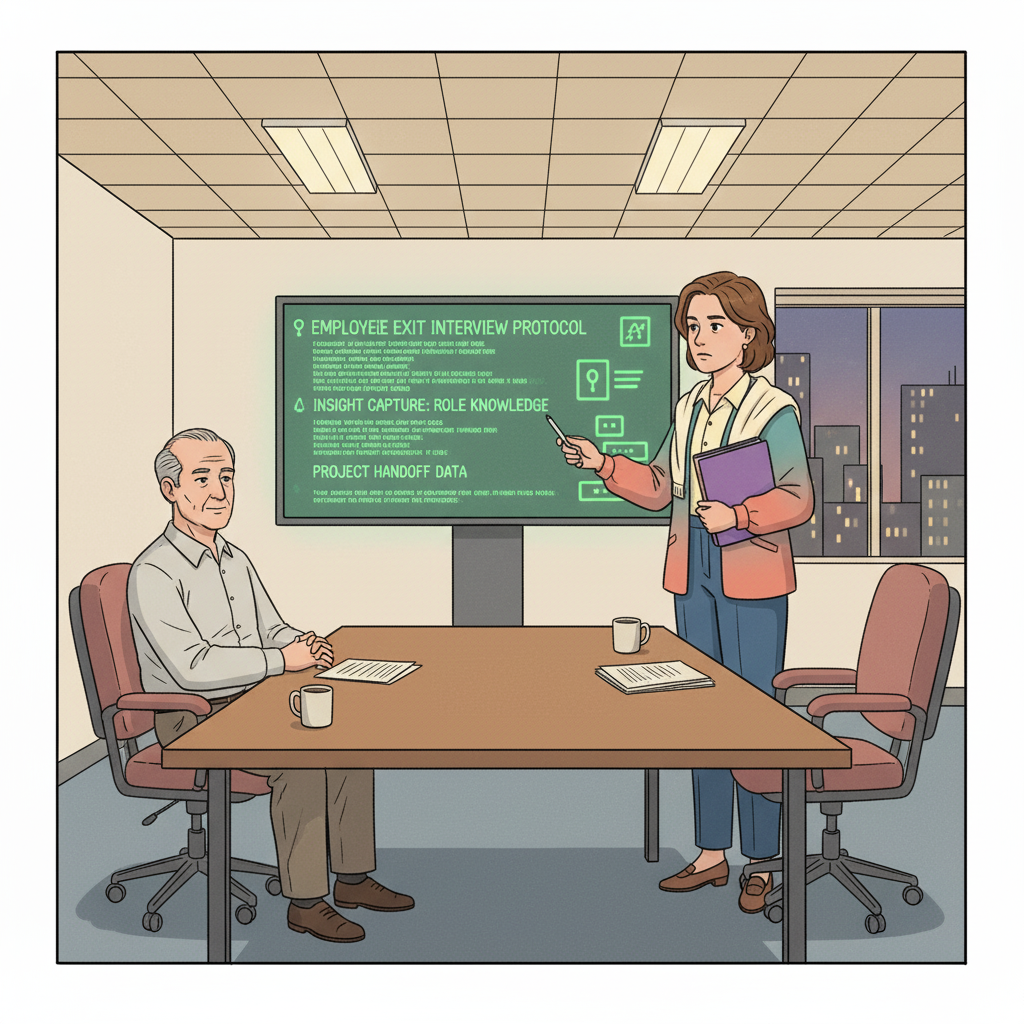
The deliverables of a structured knowledge transfer session lead to actionable insights for seamless transitions:
Handover Checklists: Outlining critical tasks that need attention before the departure.
Decision Rationale Documentation: Detailing the backgrounds of past decisions ensures continuity.
Risk Assessments: Identifying potential pitfalls and creating mitigation strategies to address knowledge gaps.
Open items: What was not covered, stated plainly, so the successor knows where to ask.
Every topic carries a completeness score, so the team knows what was captured and what still needs a conversation.
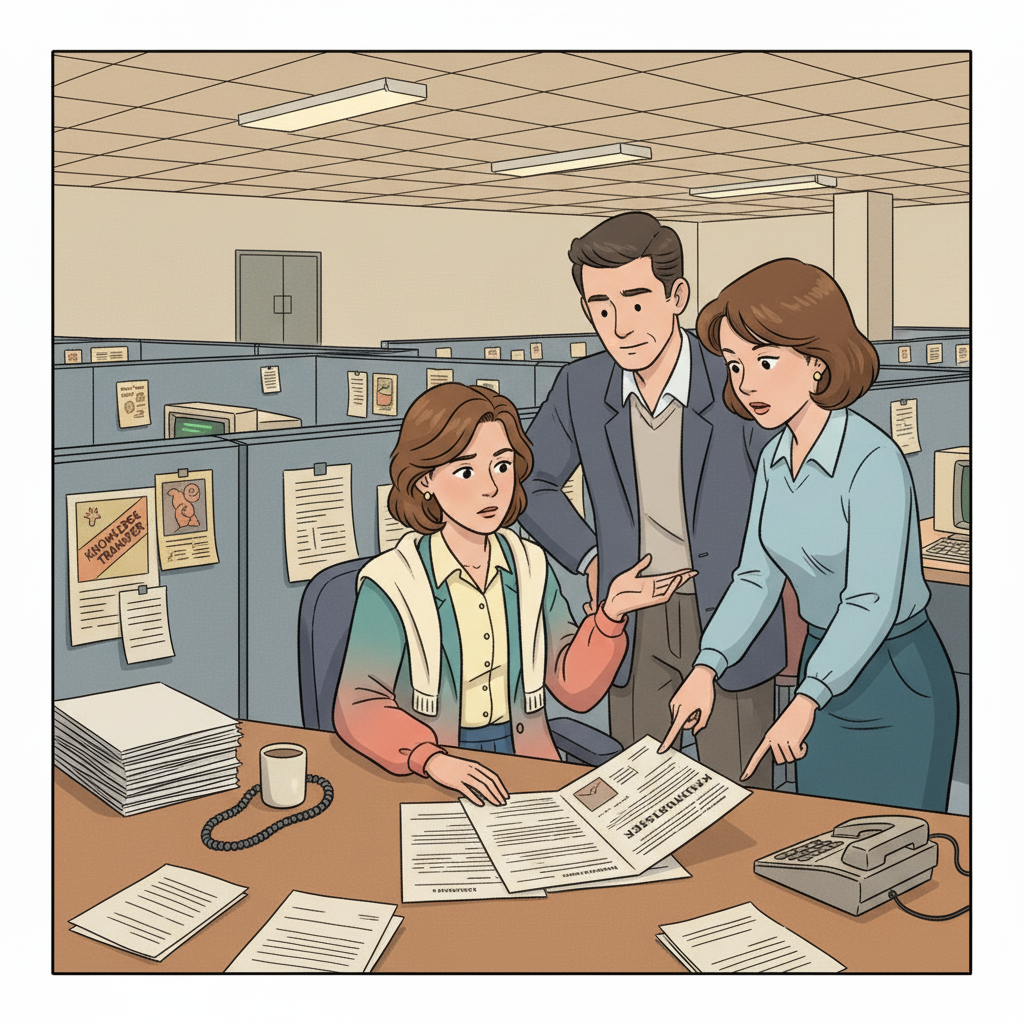
Use this checklist to ensure that critical knowledge is systematically captured before your employee retires.
Begin with an AI-interview to extract undocumented insights and process knowledge critical to operations.
Focus on recording the rationale behind decisions and historical context to future-proof operations.
Outline key client contacts and the nature of relationships, ensuring successors have access to this network.
Hand the report to the successor and walk through the open items while the retiree is still on hand.
With the date known months out, spread the interview sittings so decades of context are covered without rushing.
Wrap up with a team meeting to discuss captured knowledge and ensure all gaps have been addressed.
A short series about what actually left when one person did.
A real Knowledge Transfer Report, start to finish.
One $1,000 credit per offboarding. No subscription. Your first offboarding runs free for 7 days — you buy the credit when you unlock its Knowledge Transfer Report.
The same problem, on a much shorter clock.
The manager learns the key employee is leaving and initiates the knowledge transfer process.
With a retirement date known months ahead, sessions are spread across several sittings so decades of context can be covered without rushing.
The interview captures why long-standing processes exist, relationships built over years, exceptions that predate current systems, and history no manual holds.
A structured knowledge transfer report is produced, covering all critical domains, handover checklists, and risk areas.
Successors review the report while the retiring employee is still on hand, ask follow-ups on anything thin, and complete handover before the final week.
The organization faces potential risks including loss of client trust and operational inefficiencies as critical knowledge may be lost.
Fit is decided by what the role knows, not the function around it. It’s designed for operational knowledge — supplier history, recurring problems, and the judgment built over years; regulated records and controlled data stay out of scope.
Use structured AI-guided interviews that capture both documented and undocumented processes necessary for seamless transitions.
It’s multi-session by design, not a single sitting. An offboarding can cover up to ten structured topics with a total interview budget of around 300 minutes — in voice or text, paused and resumed around the person’s actual work. Time is budgeted, not promised: if topics don’t complete, the report says so rather than filling the gap.
A structured, voice-first interview and the Knowledge Transfer Report it produces. This is a departure event, not a documentation system — keep whatever tools your team already uses.
Ensure a successful knowledge handover when your construction lead leaves. Capture insights and prevent operational hiccups with our checklist
Explore a detailed guide on handling knowledge transfer when your founder hands off operations, including crucial documentation strategies.
Explore effective knowledge transfer strategies to capture critical information when an employee gives two weeks notice, ensuring smooth transitions.
Capture essential donor management knowledge with this checklist, ensuring your nonprofit stays funded and organized after staff transitions.
When hospital operations staff leave, the vendor, scheduling and facilities knowledge goes with them. A guided interview captures it first.