 My Employee is Leaving
Read the story
A short series about what actually left when one person did.

A surprising departure leaves the team grappling with sudden uncertainty.

With key knowledge missing, the team struggles to track donors properly.
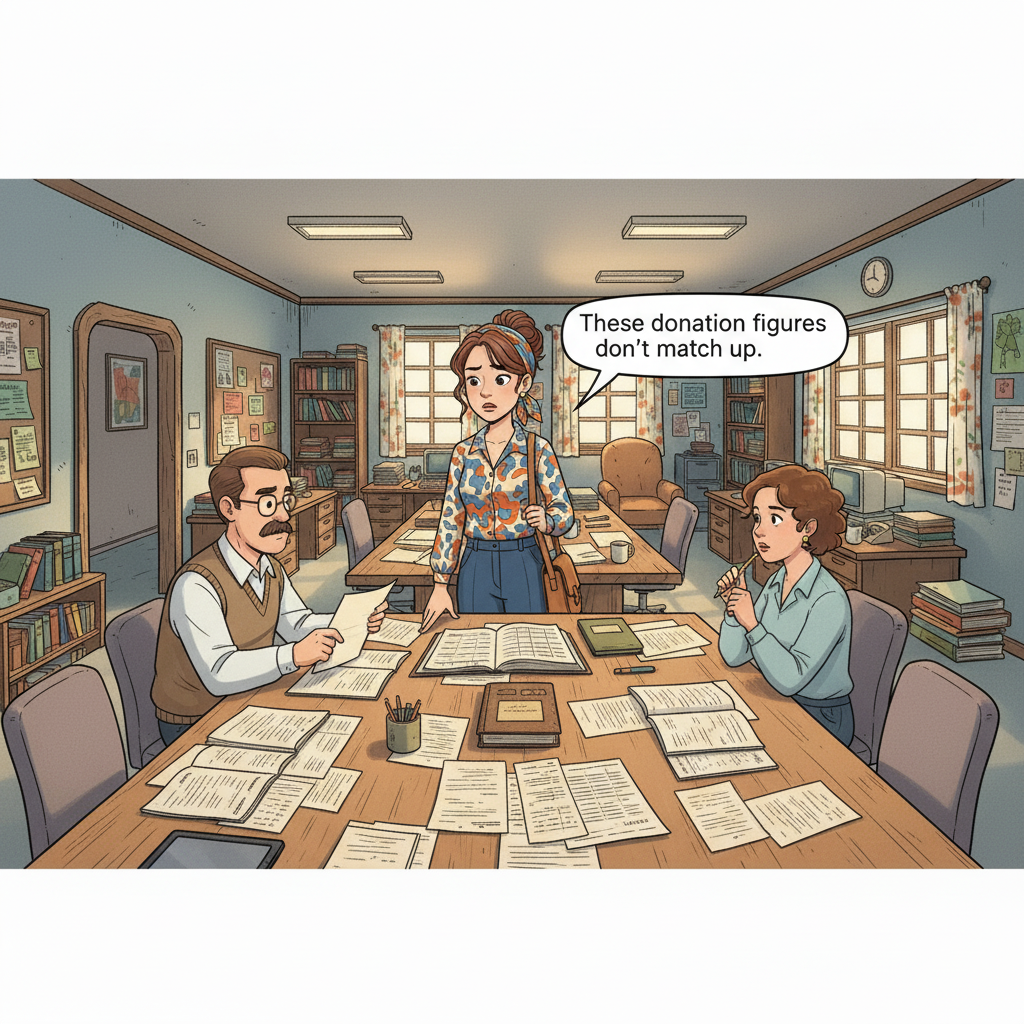
Without documentation, grant opportunities slip through their fingers.

The donor relationships and grant deadlines are in the Knowledge Transfer Report; open questions flagged.
The organization faces immediate risks including operational disruptions and lost donor relationships.
Prioritize donor management system insights and key program documentation.
Undocumented practices and personal relationships often remain unnoticed until a crisis arises.
Set up a knowledge transfer handshake and review critical responsibilities.
When your donor management personnel exit, a chain reaction of disruptions follows.
Nonprofits depend heavily on stable donor relations, and losing your key staff member can lead to:
In addition to revenue risks, operational integrity also faces significant threats:
Lastly, the human element shouldn’t be overlooked:
Understanding these chains of impact is vital for averting disasters during transitions in nonprofit settings.
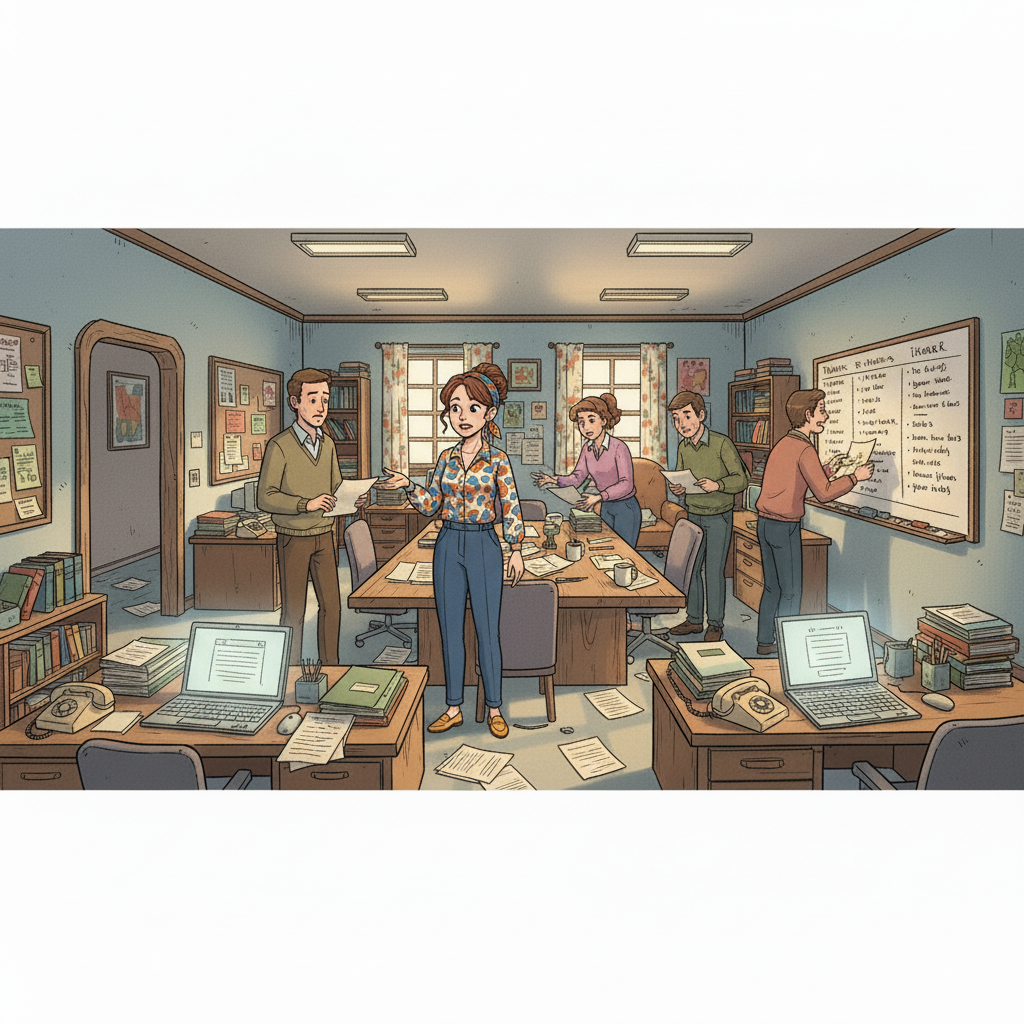
Understanding the critical knowledge areas is essential in bridging any gaps left by departing staff.
To safeguard your operations and ensure continuity, recognize the vital domains of knowledge, including:
These knowledge areas don’t exist in silos:
Recognizing these dependencies helps prevent significant setbacks when transitions occur.

An AI interview can be instrumental in capturing the nuanced details your donor management staff uphold. Here are important questions to consider:
Understanding the employee’s unique contributions and informal knowledge helps capture value that typical documentation might miss, ensuring no critical angle is left unexplored.

The outcome of a structured knowledge transfer is invaluable for nonprofits enduring staff transition.
A well-structured report not only protects your current operations but sets a precedent for future transitions, laying a solid foundation for continued success.

An actionable checklist to guide you through the knowledge transfer process effectively.
Ensure all recent donor interactions are logged and categorized in your donor management system.
Gather all previous grant applications, deadlines, and contacts to facilitate future submission processes.
Create training materials reflecting the knowledge previously held by the departed staff for new volunteers.
List essential vendor details and create a guide for escalating issues that arose previously.
Confirm all ongoing projects are inline with their budgets and identify any potential overspend that needs addressing.
A short series about what actually left when one person did.
A real Knowledge Transfer Report, start to finish.
One $1,000 credit per offboarding. No subscription. Your first offboarding runs free for 7 days — you buy the credit when you unlock its Knowledge Transfer Report.
The role that keeps the programme running.
The manager learns the key employee is leaving and initiates the knowledge transfer process.
The session is arranged around the program calendar so the departing staff member can cover grant and term commitments without a deadline slipping.
The interview captures donor and funder history, grant reporting rhythms, volunteer coordination, and the informal arrangements that hold programs together.
A structured knowledge transfer report is produced, covering all critical domains, handover checklists, and risk areas.
Program and development leads review the report, confirm nothing is missing on upcoming grant dates, and complete handover before the staff member’s last day.
Staff departures lead to operational gaps and disruption in donor communications, which can impact funding and volunteer engagement.
Industry does not decide fit — the role’s knowledge does. A non-regulated role inside a bank, hospital, or other regulated organization can be a strong fit. It’s designed for operational knowledge — process ownership, vendor history, and day-to-day judgment; regulated records and controlled data stay out of scope.
Fit is decided by the role’s knowledge, not the data around it — donor relationship history, programme rhythms, and vendor context are in scope, while donor and student records stay out of it.
An AI-guided interview can effectively extract key processes, informal workarounds, and vendor relationships before the employee departs.
It’s multi-session by design, not a single sitting. An offboarding can cover up to ten structured topics with a total interview budget of around 300 minutes — in voice or text, paused and resumed around the person’s actual work. Time is budgeted, not promised: if topics don’t complete, the report says so rather than filling the gap.
When your RevOps or Sales Ops lead leaves, reporting logic and tool configurations are at risk. Capture it all before they walk out the door.
Prevent operational disruptions when your Marketing Ops Manager leaves. Capture vital knowledge with our structured transfer process.
Everything lives in your head — until it doesn't. Structured knowledge transfer for founders handing off operations.
Learn the essential checklist and actionable steps for effective Knowledge Transfer for Retiring Employees before they leave.
When your IT or systems admin leaves, the setup reasoning and vendor contacts go too. A guided interview captures that context, never the secrets.