 My Employee is Leaving
Read the story
A short series about what actually left when one person did.
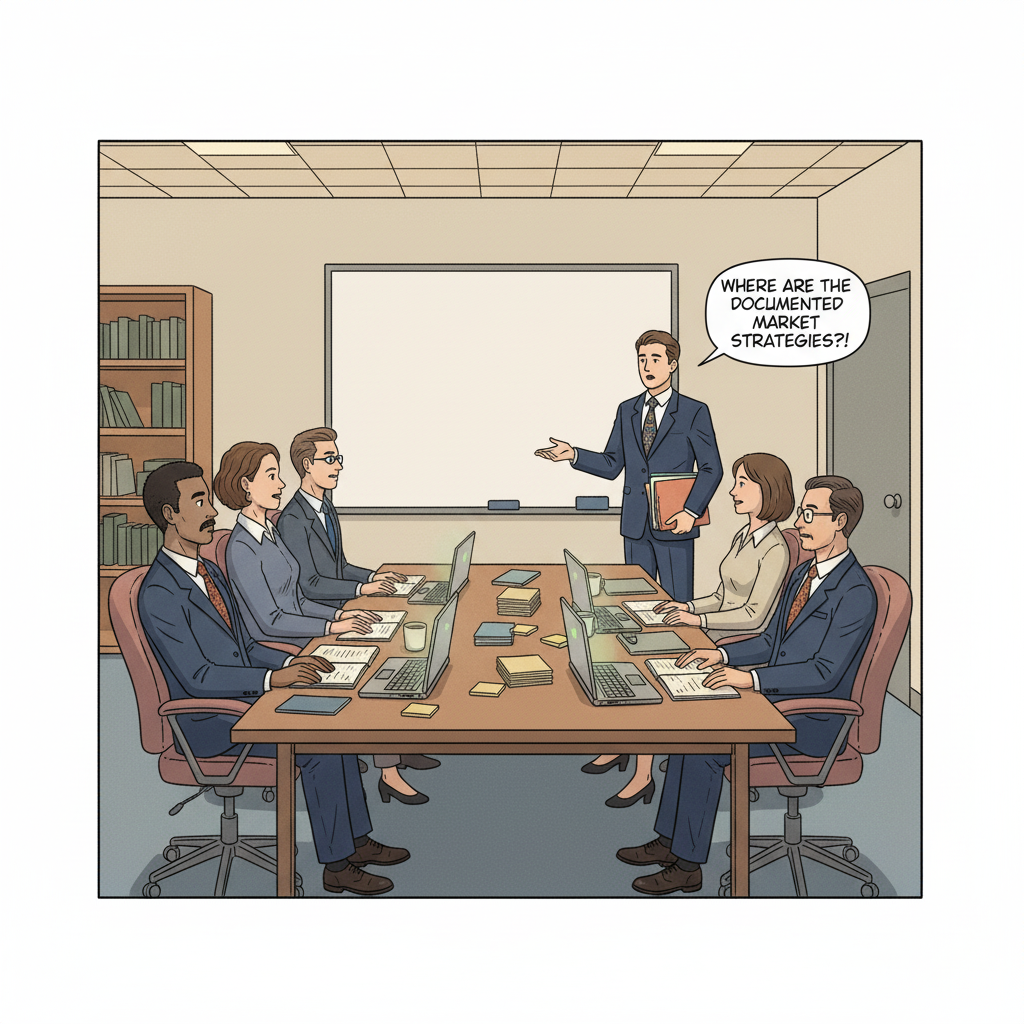
Loss of clarity as the founder’s absence leads to confusion among team members.

Critical operational knowledge is being transmitted haphazardly and not documented.

Teams grappling with missing context and reliance on undocumented processes.

The founder’s reasoning is written down at last, in the Knowledge Transfer Report — open questions listed.
In brief: what happens when a Founder / CEO leaves?
Operational oversight falters, leading to cascading effects on projects and team morale.
What should a departing Founder / CEO document first?
Focus on operational playbooks and decision-making criteria.
What founder knowledge usually goes unrecorded?
Often overlooked are undocumented workflows and informal practices.
What should a manager do in the first two weeks after a founder resigns?
Immediately engage the departing founder for knowledge transfer.
When a Founder / CEO departs, the stability of the organization can be significantly impacted. This includes:
Uncovering these potential break points requires deliberate planning and a proactive stance towards knowledge transfer, ensuring that crucial information flows seamlessly from the departing founder.
The Knowledge Transfer Report writes down the reasoning behind the standing decisions, and lists the ones that were never explained.

The departing Founder / CEO holds numerous key insights critical to sustaining an organization’s continuity, including:
This knowledge is seamless and often unspoken, until the moment it slips away. Addressing these knowledge domains during the transition is essential to minimize disruption.

To effectively capture essential operational knowledge, an AI interview should focus on probing questions designed to reveal underlying processes and dependencies:
By covering these areas, the knowledge transfer process can ensure that fewer details are left behind, providing a bridge to continuity.

The final knowledge transfer report serves numerous functions essential for a successful transition:
This comprehensive approach ensures vital knowledge remains within the organization’s grasp, preventing operational fallout.

A structured guide to ensure no critical knowledge is left undocumented during the transition.
Ensure that all daily operational tasks are recorded, detailing who does what, in what timeline.
List all critical vendors and their contacts, including the specific services they provide and any ongoing issues.
Identify who should be contacted for various issues, detailing the steps needed when problems occur.
Others need to understand who is responsible for what, ensuring clear accountability once the founder leaves.
Facilitate discussions with crucial team members to explore and document their interactions with the founder.
A short series about what actually left when one person did.
A real Knowledge Transfer Report, start to finish.
One $1,000 credit per offboarding. No subscription. Your first offboarding runs free for 7 days — you buy the credit when you unlock its Knowledge Transfer Report.
Handing off operations without losing the thread.
The manager learns the Founder / CEO is leaving and initiates the knowledge transfer process.
An AI-guided session is booked with the outgoing CEO while they are still in the seat, working through the calls only they have been making.
The interview draws out board and investor context, pricing and discount judgement, banking and vendor escalation paths, and the informal approvals that never reached a written policy.
A structured knowledge transfer report is produced, covering all critical domains, handover checklists, and risk areas.
The leadership team reads the report, tests it against the decisions still sitting on the founder’s desk, and closes the remaining gaps before the last day.
Operational oversight can falter, impacting projects and team dynamics. Communication may break down, leading to potential delays and misalignment.
Fit is decided by what the role knows, not how senior it is. It’s designed for operational knowledge — supplier and partner history, informal decision rules, and who to call when something stalls; controlled financial data and privileged legal material stay out of scope.
Conducting structured interviews to uncover decision-making processes, vendor relationships, and key operational workflows is essential.
It’s multi-session by design, not a single sitting. An offboarding can cover up to ten structured topics with a total interview budget of around 300 minutes — in voice or text, paused and resumed around the person’s actual work. Time is budgeted, not promised: if topics don’t complete, the report says so rather than filling the gap.
Explore a detailed guide on handling knowledge transfer when your founder hands off operations, including crucial documentation strategies.
Capture essential donor management knowledge with this checklist, ensuring your nonprofit stays funded and organized after staff transitions.
Discover strategies for knowledge transfer after a sudden resignation, ensuring critical operational continuity and relationship preservation.