 My Employee is Leaving
Read the story
A short series about what actually left when one person did.

Without a clear handover, supplier relationships can falter, leading to production delays.
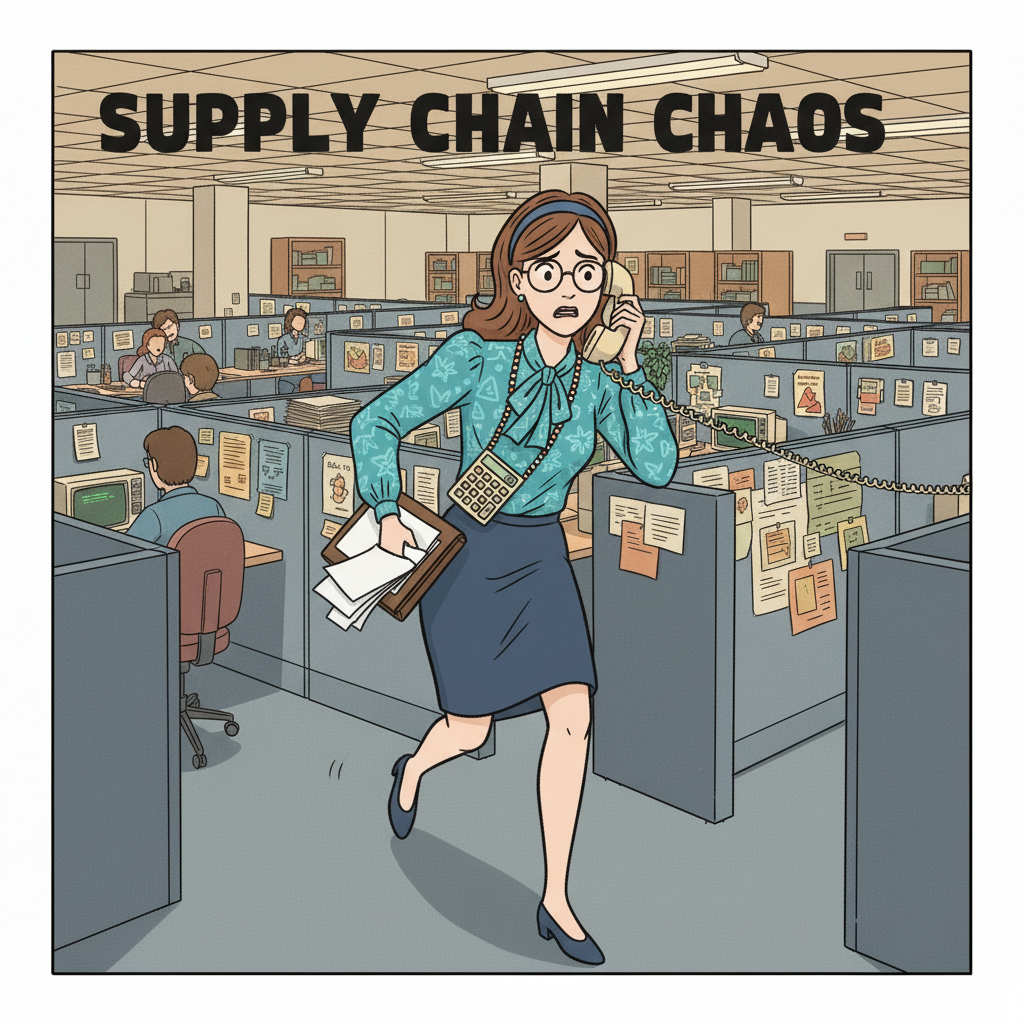
Missing vendor information can delay payments, affecting cash flow and vendor trust.

Inaccurate inventory data can create costly overstock and stockouts without proper documentation.

Supplier relationships and renewal dates, in the Knowledge Transfer Report — the open negotiations named.
In brief: what happens when a Procurement Manager leaves?
Critical workflows and vendor management can fail without the Procurement Manager’s insights.
What contract and vendor detail should be recorded first?
Focus on contract management, supplier evaluations, and compliance requirements.
Which supplier relationships exist only in one buyer’s head?
Undocumented workarounds and informal processes often fall through the cracks.
What should procurement do in the first two weeks of notice?
Begin a structured knowledge transfer session with the departing Procurement Manager.
When a Procurement Manager transitions out of a role, the organization can face significant operational impacts that affect supply chain continuity and financial health.
Without proper handover processes, key supplier relationships are jeopardized, leading to:
Procurement roles are heavily regulated. Missing documentation can lead to:
Without a Procurement Manager’s insights, spend management suffers:
Inaccurate inventory insights can cause:
The Knowledge Transfer Report lists the supplier relationships, the renewal dates and the negotiations still open.

A Procurement Manager holds an array of critical knowledge that underpins the organization’s purchasing decisions.
Knowledge of vendor flexibility and pricing arrangements is crucial for effective negotiations. This ensures:
A keen understanding of market conditions allows for informed decision-making, affecting:
Being aware of potential risks in the supply chain can significantly reduce operational disruption:

The AI interview process can uncover critical undocumented processes that are often overlooked during a handover.

The structured knowledge transfer report ensures operational continuity following a Procurement Manager’s departure.
Detailed playbooks that document all procurement processes help maintain clarity and efficiency.
Documenting the reasoning behind decisions aids in future procurement strategies.
Evaluating potential risks within supplier relationships allows businesses to mitigate issues preemptively.
Comprehensive checklists ensure that no critical elements are overlooked during transitions.

This checklist outlines actionable tasks to facilitate seamless knowledge transfer during a Procurement Manager’s departure.
Capture all critical contract nuances and negotiation strategies used with suppliers.
Detail current market conditions and trends that affect procurement strategies.
Create metrics to assess supplier performance and long-term viability.
Provide documentation on compliance regulations relevant to procurement processes.
Document the budget approval paths and spend management strategies.
Map out key vendor contacts and relationship history that’s vital for smooth transitions.
A short series about what actually left when one person did.
A real Knowledge Transfer Report, start to finish.
One $1,000 credit per offboarding. No subscription. Your first offboarding runs free for 7 days — you buy the credit when you unlock its Knowledge Transfer Report.
The adjacent role, and what it carries.
The manager learns the Procurement Manager is leaving and initiates the knowledge transfer process.
An AI-guided interview session is scheduled with the departing Procurement Manager to systematically capture institutional knowledge.
The AI interview extracts undocumented workflows, vendor relationships, decision rationale, and operational edge cases.
A structured knowledge transfer report is produced, covering all critical domains, handover checklists, and risk areas.
The team reviews the report, identifies remaining gaps, and completes the handover before the departure date.
Their absence can lead to operational chaos, with potential supply chain disruptions and increased costs due to unmanaged vendor relationships.
Fit comes from the role’s operational knowledge, not the contracts they hold. It’s designed for operational knowledge — supplier behaviour, negotiation history, and who flexes when a delivery slips; contract terms and controlled financial data stay out of scope.
Through guided AI-driven interviews that focus on supplier relationships, market intelligence, and contract management processes.
It’s multi-session by design, not a single sitting. An offboarding can cover up to ten structured topics with a total interview budget of around 300 minutes — in voice or text, paused and resumed around the person’s actual work. Time is budgeted, not promised: if topics don’t complete, the report says so rather than filling the gap.
Get a comprehensive handover checklist and practical insights for capturing vital retail knowledge before your ops lead departs.
Ensure a successful knowledge handover when your construction lead leaves. Capture insights and prevent operational hiccups with our checklist
Utilize our Warehouse Manager knowledge transfer checklist to capture operational insights before a departure, ensuring continuity and efficiency.