 My Employee is Leaving
Read the story
What actually leaves the building when the person who held the context steps away.

The date is known weeks in advance — the one advantage this transition has.

Because they are still here, nothing gets written down.

Weeks in, the cover person meets the first exception nobody documented.

The cover person works from the Knowledge Transfer Report; the exceptions are written down.
The work keeps running but loses its owner, and the reasoning behind it is never written down because the person is still reachable.
The recurring commitments that fall inside the leave window, and the decisions the person makes without asking anyone.
Once the leave date is confirmed, with enough runway for the employee to confirm and correct the extracted facts.
Book the sessions while the person is still doing the work, and read the report before they go rather than after.
The work keeps running, but the reasoning behind it walks out the door with its owner.

Most of what matters here has never been written down, because the person has always been reachable.
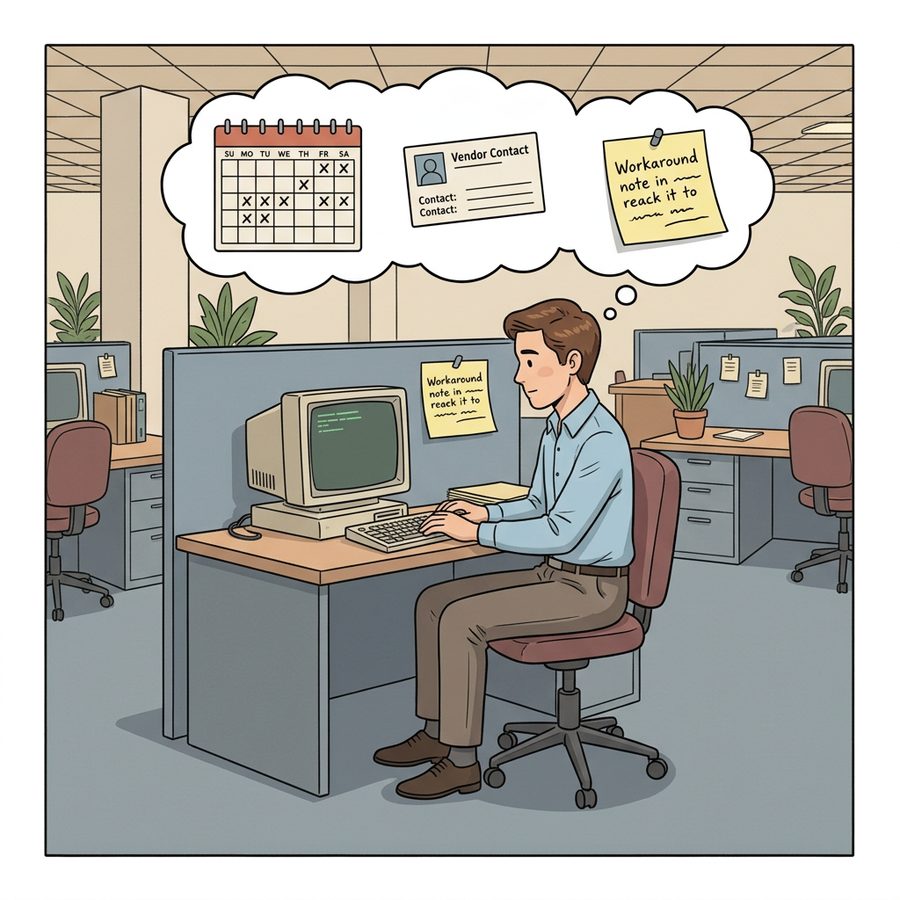
Extended leave is a confirmed transition with a date on it, so the judgment behind the routines can still be captured.

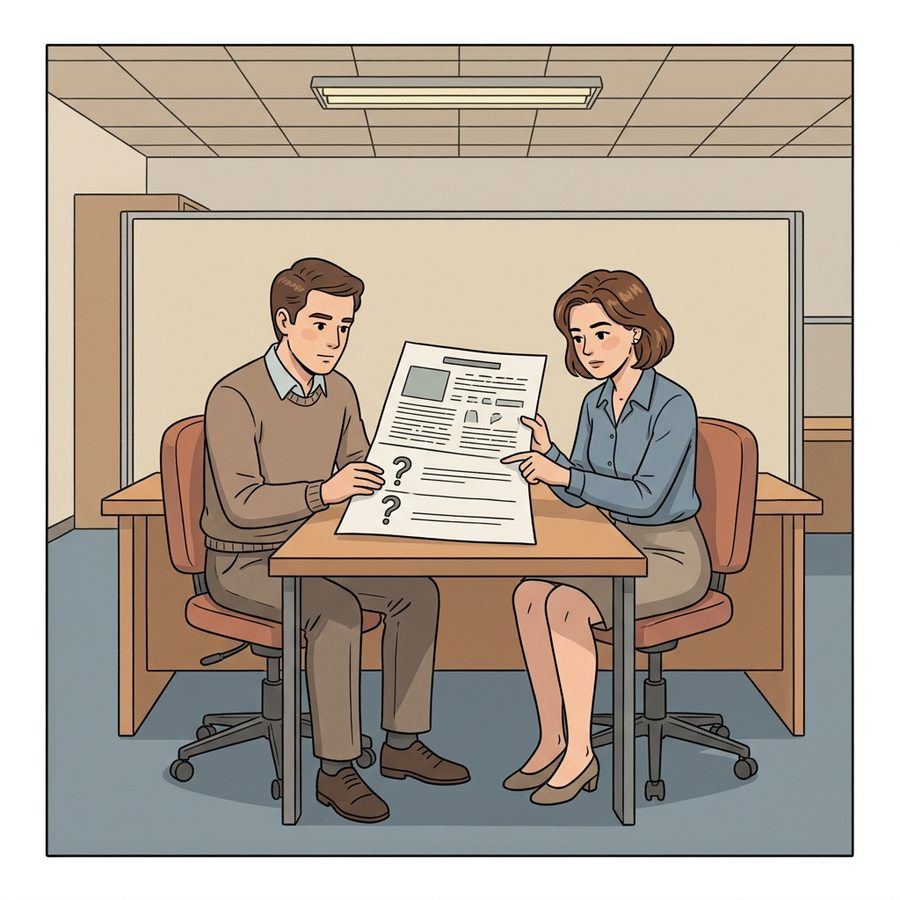
The output is a structured Knowledge Transfer Report, not a transcript.
See a sample report to judge the depth for yourself before you commit to anything.
Concrete ground to cover before the last day before leave.
Name the date, the system, and who notices if it is missed.
Include the thresholds — the amount, the exception, the customer type.
Vendors, contractors, and the one person at each who actually responds.
The workaround is usually the real process.
The dashboard, the queue, or the log you look at by reflex.
Name the calls that wait for your return, and who signs off in the meantime.
What actually leaves the building when the person who held the context steps away.
Judge the depth of the Knowledge Transfer Report before committing to anything.
One $1,000 credit per offboarding. No subscription. Your first offboarding runs free for 7 days — you buy the credit when you unlock its Knowledge Transfer Report.
The same problem when the person stays but the role changes.
The manager knows the window and starts the handover while the employee is still at their desk.
The interview is split across several sessions so it fits around the work still being done.
Recurring commitments, decision thresholds, external contacts, and the workarounds that are the real process.
The employee confirms, edits, or rejects each extracted fact before it reaches the report.
A completeness-scored report with the open questions listed, ready for the cover person and for the employee’s return.
For continuity purposes, yes — the work needs an owner and the context needs to be written down. The difference is that the person comes back, so the report also serves as their re-entry brief.
Yes. One $1,000 credit covers one transition, including the multi-session interview and the final report.
Completeness is scored and the open questions are listed explicitly. It is a reviewable picture with known gaps, not a guarantee that nothing was missed.
Once the leave date is confirmed. The interview happens in sessions, so starting early leaves room for the employee to confirm and correct facts.
Fit is decided by what the departing role knows, not the length of the absence or the industry around it. A non-regulated role inside a regulated organization is often a strong fit. It’s designed for operational knowledge — recurring commitments, vendor history, and the judgment behind everyday exceptions; regulated records and controlled data stay out of scope.
Discover the importance of capturing critical knowledge when employees leave. Don't let operational continuity suffer during transitions.
Maintenance managers carry an unwritten service history. A guided interview captures the equipment quirks and vendor reality before they go.
Explore the Engineering Pivot Map to navigate critical knowledge transfer during employee departures. Prevent disruptions and operational gaps.
Access a structured checklist and actionable insights for effective knowledge transfer in logistics when a key member departs.
Capture essential knowledge when a Food Safety Manager departs. Get practical checklists, interview questions, and risk assessments.
Capture vital knowledge from your Production Supervisor with structured interviews and Knowledge Transfer Reports for seamless offboarding.